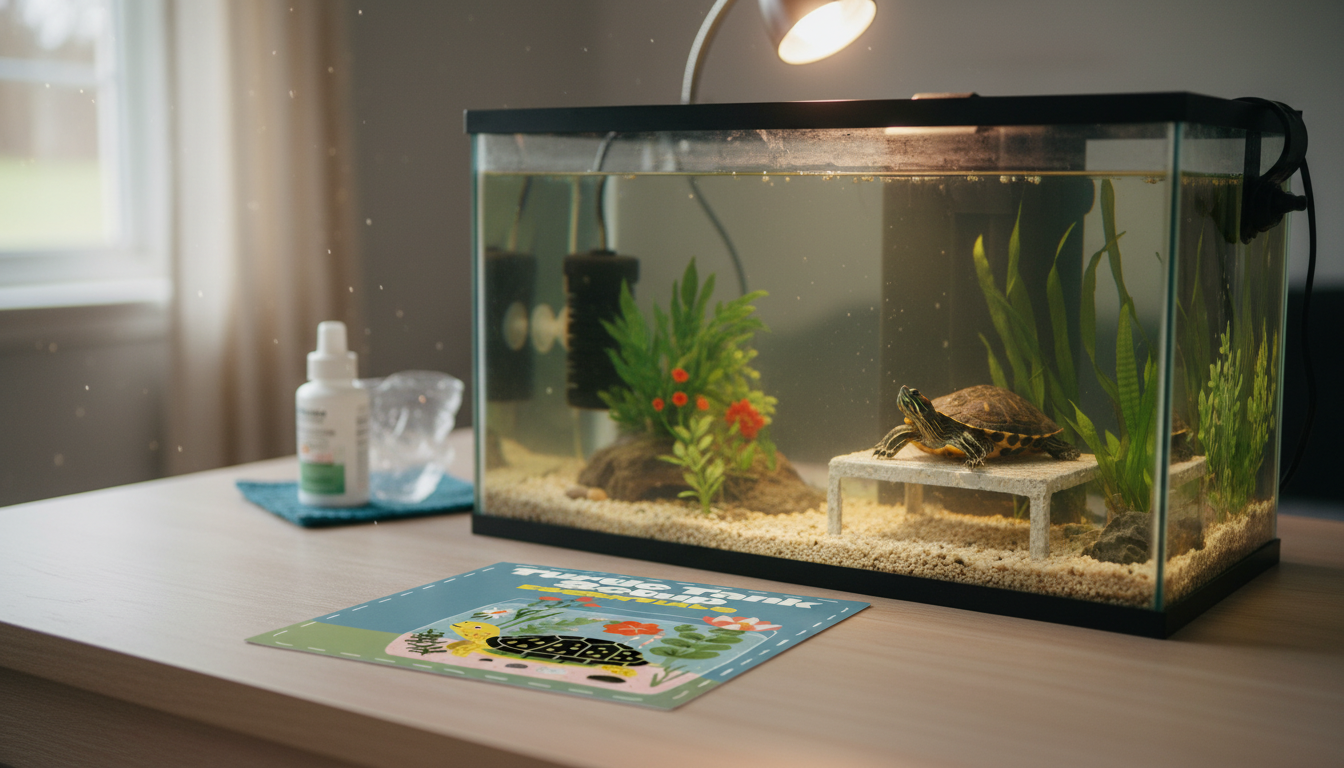
A healthy turtle habitat is a balance of space, clean water, safe basking, and the right heat and UVB. This step-by-step setup plan focuses on the essentials that prevent the most common issues—dirty water, shell problems, poor appetite, and constant equipment adjustments—so the tank runs smoothly from day one.
Start by confirming what type of turtle you have. Aquatic and semi-aquatic turtles need swim space plus a fully dry basking area, while terrestrial species need different substrates, humidity, and heat gradients.
When in doubt, go larger. More water volume dilutes waste and makes temperature and chemistry more stable—meaning fewer emergency scrubs and fewer “why is the water cloudy again?” moments.
The goal is a system that runs consistently with minimal daily adjustments. For most keepers, filtration and correct basking/UVB setup solve the majority of long-term problems.
| Setup item | Purpose | Getting it right |
|---|---|---|
| Tank (large volume) | Stable space and water volume | Bigger is easier to keep clean; plan for adult turtle size |
| High-capacity filter | Removes waste and keeps water clear | Aim for strong turnover; rinse media in tank water, not tap |
| Basking platform | Fully dry resting area | Must be dry, non-slip, and easy to climb; support full weight |
| Basking heat lamp | Creates warm basking zone | Position for a safe hotspot; avoid burn risk and wobbling fixtures |
| UVB lighting | Supports calcium/Vit D3 pathway | Correct distance and unobstructed exposure; replace on schedule |
| Water heater (as needed) | Keeps water temperature stable | Use a guard if the turtle can contact the heater |
| Dechlorinator | Makes tap water safe | Treat new water every change; follow dosing instructions |
| Thermometers + timer | Consistency and monitoring | Track water and basking temps; automate day/night light cycles |
If you want a simple way to double-check placement, water prep, and weekly tests, use the Turtle Tank Setup Essentials printable guide and digital checklist to keep the routine consistent (especially helpful after busy weeks).
Water that looks clear can still be unsafe. Testing and stability matter more than perfect-looking decor.
A turtle’s basking zone is not optional “extra space.” It’s where drying, warming, and UVB exposure support normal shell and skin condition.
Keeping supplies together helps maintenance actually happen on time. For broader feeding fundamentals across pets (labels, portions, and common nutrition pitfalls), Pet Nutrition 101: What Every Pet Parent Needs to Know is a handy reference to keep with your care notes.
Partial water changes are typically done weekly or as test results demand, depending on tank size, feeding, and filter strength. Dechlorinate new water every time, and avoid frequent full resets since they disrupt stability and the biological filter.
Yes—heat and UVB do different jobs. Heat supports digestion and basking behavior, while UVB supports vitamin D3 and calcium metabolism for shell and bone health, and it must be placed correctly and replaced on schedule.
Cloudiness is common in new tanks while cycling, but it can also come from overfeeding, inadequate filter capacity, or clogged impellers/media. Test for ammonia and nitrite, reduce waste input, and increase partial water changes until parameters stabilize.





Leave a comment