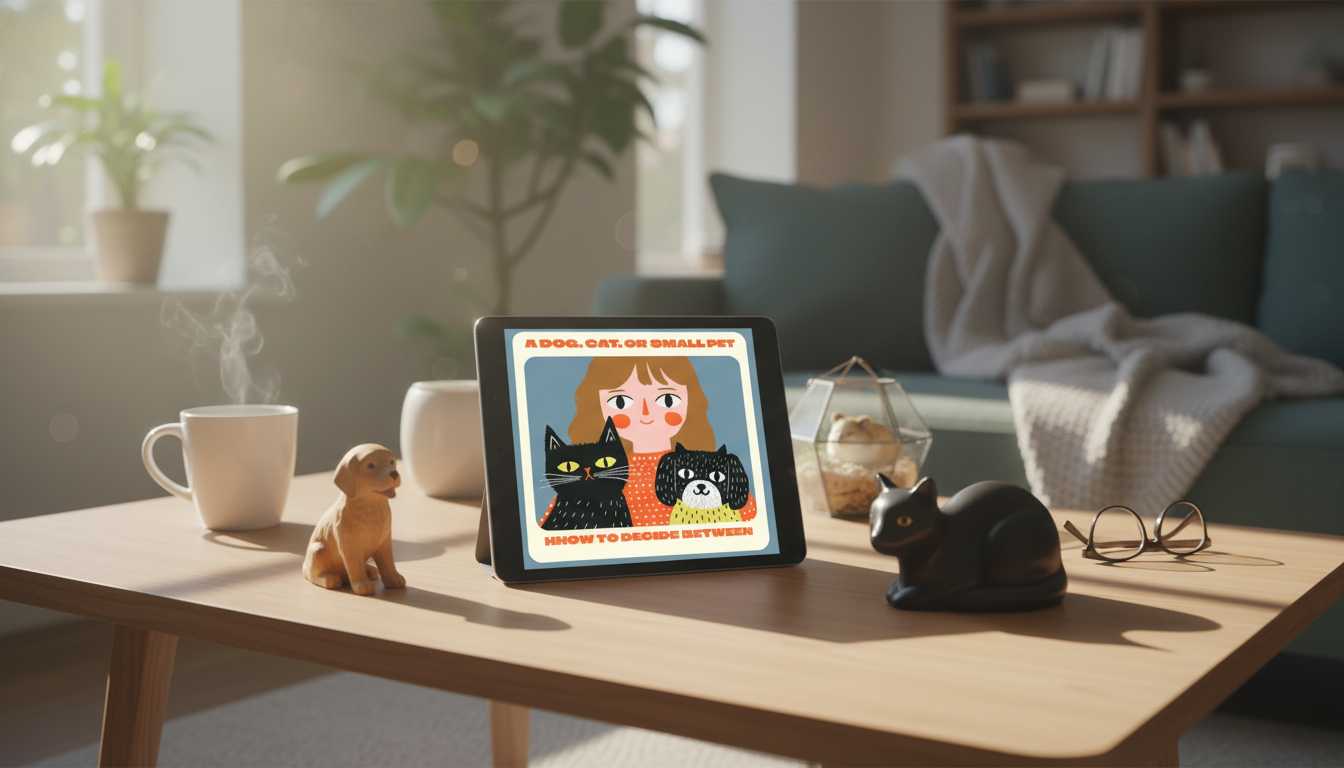
Choosing a pet is easier when the decision starts with daily reality: time at home, energy level, budget, space, and comfort with training and noise. This guide breaks down the trade-offs between dogs, cats, and small pets so the choice fits long-term routines—not just a moment of excitement.
A great match is less about the cutest face and more about what you can repeat every day—especially on your busiest weeks.
Dogs tend to thrive with predictable structure. If a typical day can reliably include walks, training moments, and companionship, a dog can be an amazing fit.
| Need | What it usually involves | If it’s hard to provide, consider |
|---|---|---|
| Bathroom breaks | Multiple breaks daily; puppies/seniors need more | Adult cat or certain small pets |
| Exercise | Walks, play, training games; breed-dependent | Cat with structured playtime |
| Training | Consistency, patience, rewards, boundaries | Cat or lower-handling small pet |
| Social time | Companionship, attention, supervision | Independent cat or small pet setup |
Cats usually offer more schedule flexibility than dogs, but they still need consistent care and engagement. A cat can be ideal for people who want companionship at home without the same outdoor routine.
Practical tip: if the household dislikes repetitive cleaning tasks, be honest about whether litter upkeep feels easier than daily walks in bad weather. The “better” choice is the one you’ll actually maintain.
Small pets can work beautifully in apartments or smaller homes, but “small” doesn’t automatically mean “easy.” Many have very specific habitat, diet, and veterinary needs.
| Factor | Dog | Cat | Small pet |
|---|---|---|---|
| Daily hands-on time | High | Moderate | Low–Moderate (species-dependent) |
| Schedule flexibility | Lower | Higher | Moderate |
| Training demands | Higher | Lower–Moderate | Low (mostly habitat/husbandry) |
| Space needs | Moderate–High | Low–Moderate | Low–Moderate (enclosure can be large) |
| Typical noise impact | Moderate–High | Low | Low–High (species-dependent) |
| Travel planning | More involved | Moderate | Moderate (needs reliable caretaker) |
For grounded, species-agnostic guidance on planning responsibilities, see AVMA: Responsible Pet Ownership and practical care references from the ASPCA: Pet Care.
| Your most common situation | Often fits best | Why |
|---|---|---|
| Predictable routine and outdoor time | Dog | Thrives with structure, exercise, and frequent interaction |
| Busy schedule but wants companionship | Cat | More flexible while still offering bonding and play |
| Limited space; enjoys habitat setup | Small pet | Enrichment and care can center on enclosure and routine maintenance |
| Low tolerance for noise and training | Cat or certain small pets | Lower daily behavior-shaping demands than many dogs |
| Frequent travel without reliable sitters | Reconsider timing | Any pet needs dependable care when away |
If adoption is the plan, the Humane Society of the United States: Adopting a Pet is a helpful starting point for setting expectations and preparing the home.
Cats are often more schedule-flexible than dogs, but they still need daily feeding, clean litter boxes, enrichment play, and routine vet care. “Easier” depends on whether the household prefers litter and scratching management over walks, training, and frequent bathroom breaks.
“Small” doesn’t always mean low-care, so the best option is the species whose daily tasks fit reliably into the schedule. Focus on cleaning frequency, diet complexity, handling expectations, and whether an exotic-pet vet is accessible before committing.
Plan on roughly 60–180 minutes per day for many dogs (more for puppies), around 30–60 minutes for many cats (plus litter upkeep), and 15–60 minutes for many small pets depending on habitat needs. Add extra buffer time during the first few weeks for setup, observation, and routine-building.







Leave a comment