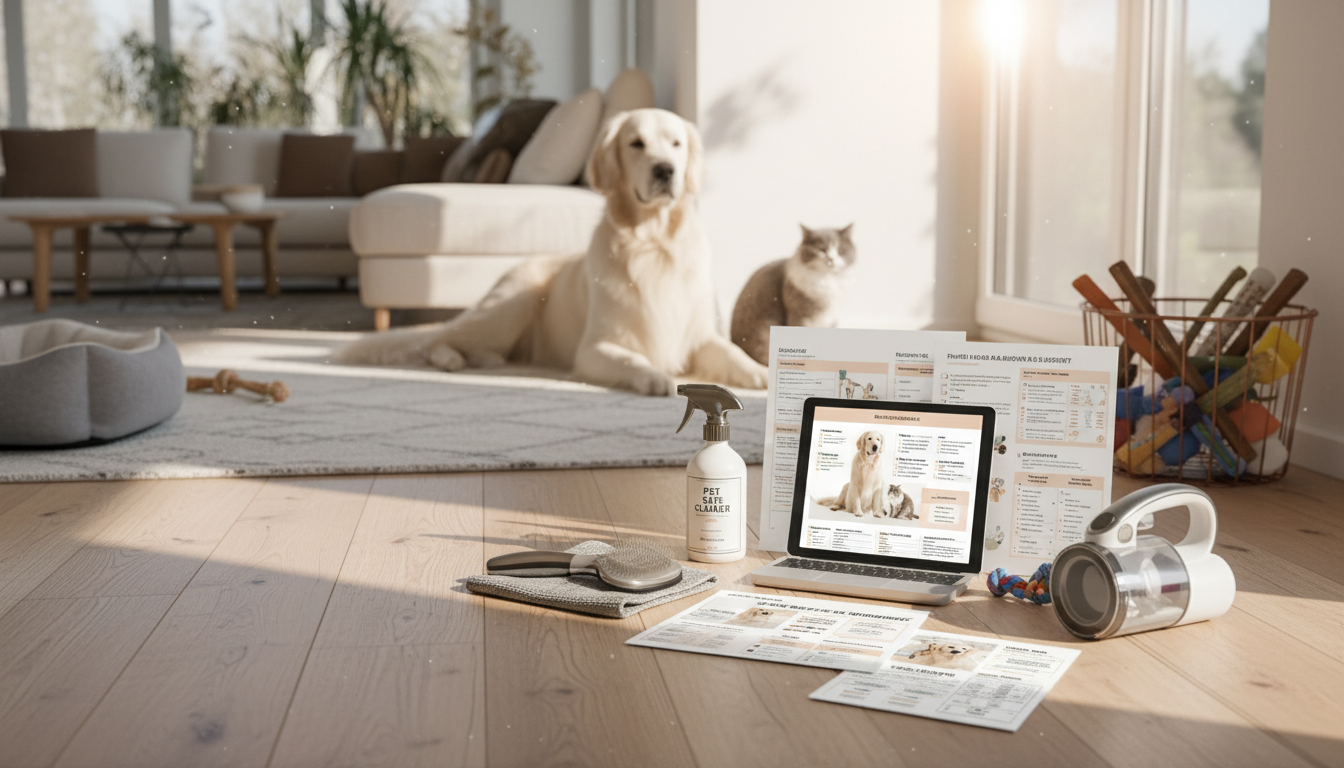
Daily pet life comes with spills, fur, litter tracking, muddy paws, and the occasional accident—often at the worst possible moment. The Everyday Pet Mess Management Bundle brings together 10 essential digital guides, eBooks, and checklists designed to help set up simple routines, choose the right supplies, and respond quickly so messes don’t turn into lingering stains, odors, or stress.
If pet-related cleanup has started to feel random—grab a towel, panic-clean, hope for the best—this is a more repeatable system: small daily resets, fast-response steps for common messes, and room-by-room habits that keep your home feeling fresh without constant deep-cleaning.
For a ready-to-use system, see The Everyday Pet Mess Management Bundle: 10 Essential Guides, eBooks, and Checklists.
The best cleanup results usually come from two principles: remove the source first, then dry thoroughly. Here’s a fast response plan that prevents set-in stains and lingering odor.
When you’re short on time, the goal isn’t perfection—it’s preventing a small mess from spreading, soaking in, or reappearing tomorrow.
A clean home with pets often comes down to “micro-systems” placed where messes begin. Start with the zones below and keep each routine small enough that it actually happens.
Speed matters. If the right supplies are already within reach, cleanup becomes a quick routine instead of a full house project.
| Routine | Frequency | Time Needed | What to Do |
|---|---|---|---|
| Daily reset | Every day | 5–10 minutes | Spot-check floors, wipe feeding area, shake out mats, quick lint pass on furniture |
| Accident readiness check | 2–3× per week | 2–5 minutes | Refill wipes/towels, confirm enzyme cleaner stocked, empty small trash bags |
| Hair & dander control | Weekly | 15–25 minutes | Vacuum upholstery, clean pet bedding, run/replace filters as needed |
| Floor care | Weekly | 20–40 minutes | Vacuum thoroughly, mop with pet-safe product, dry floors completely |
| Deep-clean rotation | Monthly | 45–90 minutes | Steam/spot treat carpets, wash throws/covers, clean baseboards and corners |
For additional safety guidance on household risks, review ASPCA Animal Poison Control – Household Hazards. General pet-care guidance from the AVMA – Pet Care can also help you make practical, pet-friendly choices.
If food-related stomach upset or inconsistent feeding routines contribute to messes, pairing cleanup routines with a straightforward nutrition reference can help. Consider Pet Nutrition 101: What Every Pet Parent Needs to Know as a companion guide.
It covers common day-to-day scenarios like accidents, vomit, muddy paws, shedding, litter tracking, food and water spills, and lingering odors, with routines and checklists that make cleanup more consistent.
Yes, when you use pet-safe products as directed, ventilate the area, and keep pets away from damp surfaces until everything is fully dry. Never mix cleaning chemicals, and contact a veterinarian if you suspect exposure.
Many homes feel more manageable within a week once a daily 5–10 minute reset is consistent. Bigger improvements with odor and hair often show up within a month when weekly and monthly rotations are followed.





Leave a comment