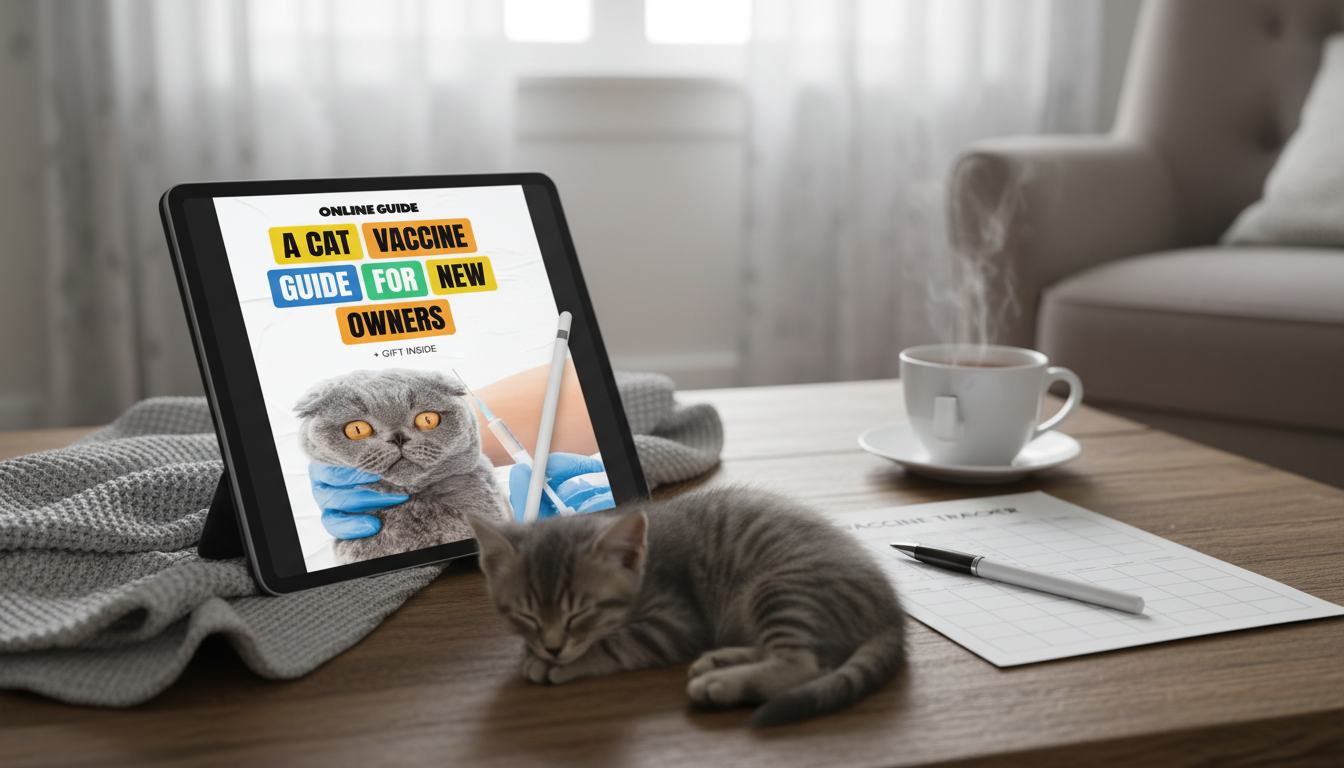
Vaccines help protect cats from common, serious diseases—especially during kittenhood and in the first year at home. The early months can feel like a blur of vet visits, schedules, and paperwork, so it helps to understand which vaccines are considered “core,” which depend on lifestyle, and how to keep a clean record you can reference anytime. Below is a practical, owner-friendly overview of typical timelines, what to expect at appointments, and an easy way to stay organized with a printable vaccine tracker.
Vaccines work by “training” the immune system to recognize specific infections so it can respond faster and more effectively. That preparation can reduce severe illness, complications, and (for some diseases) the risk of death.
For kittens, timing is especially important. Maternal antibodies passed through nursing fade over time, which creates a window where a kitten becomes more vulnerable—yet may still not respond fully to a single vaccine dose. That’s why a series (multiple doses) is commonly used early on.
Vaccination planning also supports community health. Rabies vaccination, for example, is required in many areas and protects people as well as pets. Even cats that live indoors can encounter disease: accidental escapes, contact with other pets, and routine vet visits can all create exposure opportunities.
Veterinarians often sort vaccines into two categories:
Common core examples include FVRCP (feline viral rhinotracheitis/herpesvirus, calicivirus, panleukopenia) and rabies (requirements vary by state, county, and municipality). Common lifestyle examples may include FeLV (feline leukemia virus), particularly for kittens/young cats or cats with any chance of contact with unknown cats.
| Category | Typical purpose | Often recommended for |
|---|---|---|
| Core | Protects against widespread or high-impact diseases | Most cats (kittens and adults) |
| Lifestyle (non-core) | Adds protection when exposure risk is higher | Outdoor cats, multi-cat homes, shelters/boarding situations |
For deeper guidance beyond general rules of thumb, these references are widely used and updated regularly: AAHA/AAFP Feline Vaccination Guidelines, AVMA—Vaccinations, and Cornell Feline Health Center—Vaccines.
Exact schedules vary by veterinarian, product, and regional requirements, so your clinic’s plan should be the final word—especially if your kitten was adopted with an incomplete or unknown history. In many cases, a “series” approach is used because immunity develops over multiple doses as maternal antibodies fade.
Spacing matters. Keeping appointments close to the recommended interval helps avoid protection gaps, particularly for kittens newly introduced to other pets or new environments.
| Cat age | Often discussed vaccines | Notes to plan for |
|---|---|---|
| 6–8 weeks | FVRCP (start of series) | Discuss deworming, stool testing, and baseline wellness exam |
| 10–12 weeks | FVRCP (booster) | Ask about FeLV if exposure risk is possible |
| 14–16 weeks | FVRCP (booster), Rabies (timing varies) | Plan microchip, behavior and socialization check-in |
| ~1 year | Boosters per veterinarian plan | Review lifestyle changes (indoors/outdoors, new pets, boarding) |
| Adult | Boosters at veterinarian-recommended intervals | Intervals differ by vaccine and product; avoid guessing |
Two cats the same age can need different vaccine plans depending on daily life. It helps to be ready to describe your cat’s routine in detail so your veterinarian can tailor recommendations.
| Field | Why it helps |
|---|---|
| Vaccine name | Clarifies what protection was given and what’s still needed |
| Date administered | Keeps the series and boosters on track |
| Due date/interval | Supports timely scheduling and reminders |
| Clinic and veterinarian | Speeds up record requests and follow-ups |
| Notes/reactions | Improves safety planning for future visits |
If you prefer a straightforward checklist you can reference before each appointment, A Cat Vaccine Guide for New Owners (digital download) is designed to turn scattered notes into a simple first-year system. It’s especially helpful for preparing questions, understanding core vs. lifestyle decisions, and maintaining a clean vaccine log.
For a well-rounded routine, pair your vaccine plan with solid feeding basics and a consistent approach to treats and portioning. Pet Nutrition 101 (digital eBook download) is a handy companion for building everyday habits that support long-term health.
Core vaccines are commonly recommended even for indoor cats because exposure can occur through accidental escapes, open windows/screens, other pets, or veterinary visits. Rabies rules vary by location, so your clinic can confirm what’s required where you live.
Many kittens receive an FVRCP series with boosters, plus rabies at an age set by local rules and your veterinarian’s protocol. FeLV is often discussed for kittens and young cats, especially if there’s any chance of contact with other cats.
Mild sleepiness, temporary soreness, or a brief dip in appetite can be normal. Contact a veterinarian promptly for facial swelling, hives, breathing trouble, collapse, persistent vomiting, or severe lethargy.






Leave a comment