
Emotional resilience is the skill of recovering from stress, staying grounded during change, and returning to a calmer baseline after difficult moments. A simple checklist turns that skill into small, repeatable actions—so progress feels visible, not vague. This printable digital download organizes the core habits of resilience into steps that can be practiced daily and reviewed weekly.
Resilience doesn’t mean never struggling. It means having a reliable way to steady yourself, respond with intention, and recover with less wear-and-tear. If you’ve ever felt like you “know what to do” but can’t access your tools when emotions run high, a structured checklist can be the bridge between insight and follow-through.
Resilience often shows up in small moments, not big speeches. It can look like:
Organizations like the American Psychological Association describe resilience as a set of behaviors, thoughts, and actions that can be learned and developed. That’s good news—because it means steadier days can be built, one rep at a time.
When stress is high, the brain tends to narrow its options. A checklist helps by making the next step clearer and easier to start.
Simple, repeatable actions are also consistent with broad mental wellbeing guidance like the NHS “steps to mental wellbeing,” which emphasizes everyday practices that add up over time (NHS: 5 steps to mental wellbeing).
The checklist is designed to guide resilience habits in a structured sequence so you’re not reinventing the wheel every time you feel off-center.
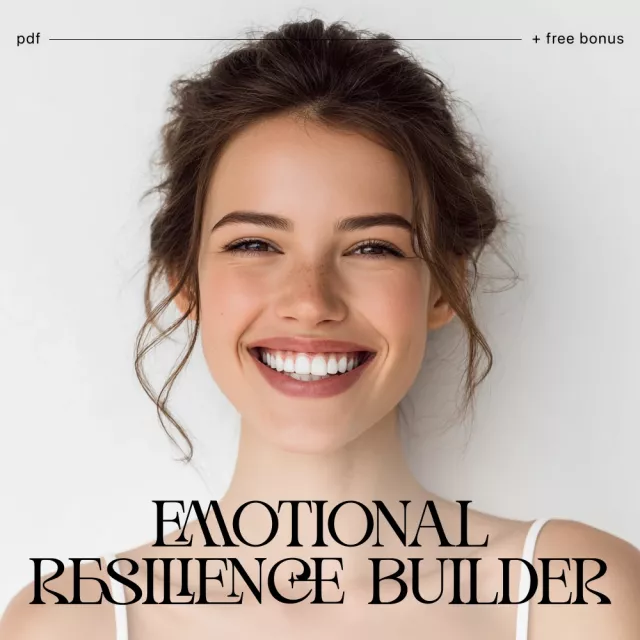
If you want a straightforward tool you can start today, use The Step-by-Step Emotional Resilience Builder printable checklist (digital download) as your daily “anchor” for steadier emotional habits.
| Day | Focus | Checklist actions | Time |
|---|---|---|---|
| 1 | Awareness | Track top triggers + rate intensity 1–10; note body signals | 5–10 min |
| 2 | Grounding | Practice 60–90 seconds of slow breathing; 5-4-3-2-1 senses reset | 5 min |
| 3 | Thought accuracy | Write the main thought; list 2 facts for/against; create a balanced alternative | 10 min |
| 4 | Micro-boundaries | Identify one boundary; draft a 1–2 sentence script; practice once | 10 min |
| 5 | Support | Send one message to a safe person; schedule a check-in or ask for a specific need | 5–10 min |
| 6 | Recovery | Plan one restorative activity (walk, stretch, music, early bedtime) and do it | 15–30 min |
| 7 | Review | Circle top 2 tools that worked; choose 1 adjustment for next week | 10–15 min |
If you like the clarity of checklists in other parts of life, you might also enjoy Your Everyday Scent Made Simple – Daily Perfume Checklist for an easy, low-effort routine you can “set and forget” on busy mornings.
For additional mental health basics and supportive self-care ideas, the National Institute of Mental Health (NIMH) offers a helpful overview of everyday actions that protect wellbeing.
Daily use for 5–10 minutes plus a weekly review works well for most people. Consistency matters more than intensity, and using a “minimum version” on hard days helps keep the habit intact.
It supports coping and self-regulation habits that many people find useful during stressful periods. It isn’t a replacement for professional mental health care, so consider reaching out for support if symptoms feel severe, persistent, or unsafe.
Start with body regulation and safety first (slow breathing, grounding, hydration, stepping away), then return to the reflection steps once you’re calmer. If needed, contact a trusted person for support.





Leave a comment