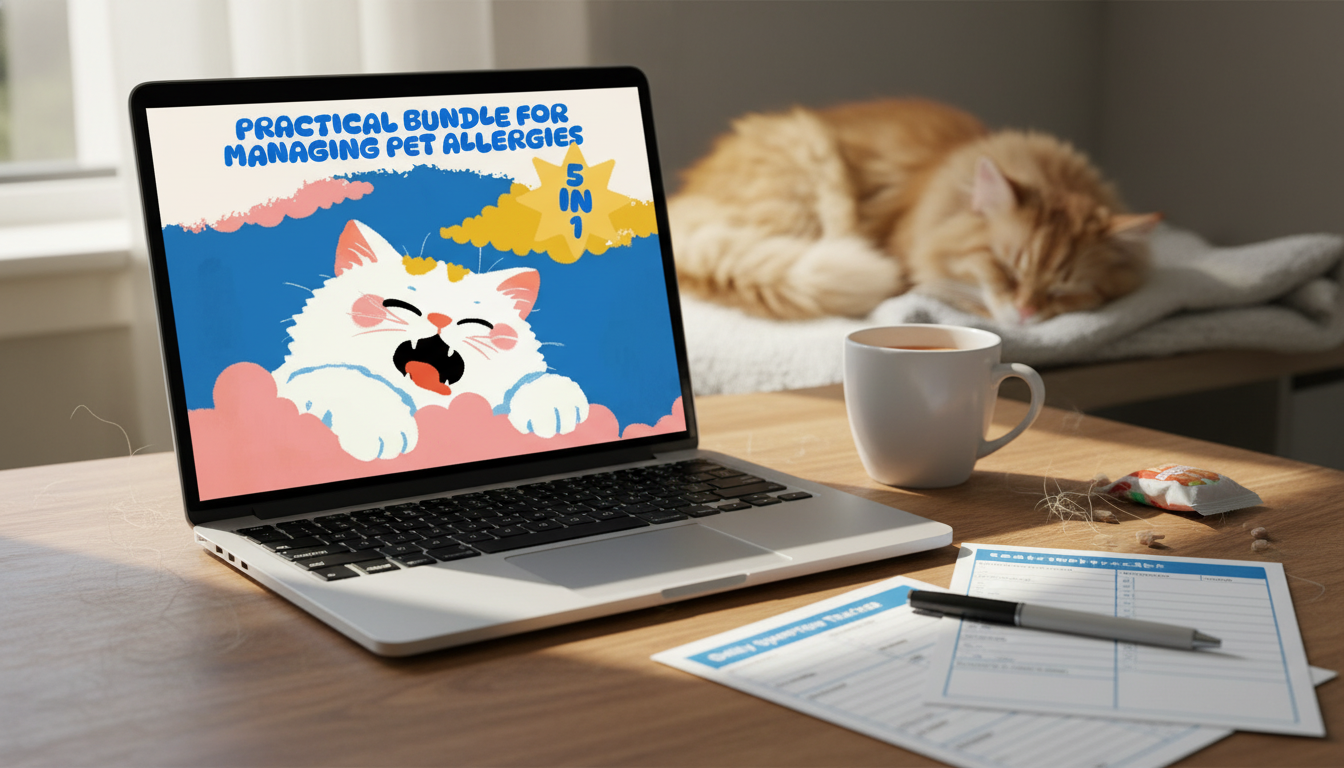
Pet allergies can turn everyday routines—cuddles on the couch, bedtime snuggles, even a quick vacuum—into an exhausting cycle of symptoms and guesswork. A clear plan helps: reduce allergens at the source, keep the home easier to maintain, and track what actually makes a difference. The Practical Bundle for Managing Pet Allergies with Ease – 5-in-1 Digital Download is built to make those steps simpler with ready-to-use resources that fit into real schedules.
Pet allergies often show up as:
Symptoms can feel inconsistent because allergens build up in fabrics, circulate with airflow, and hitchhike on clothing. On some days you may spend more time on the sofa, wear the same hoodie after snuggling, or run the HVAC more—small changes that can cause big swings.
Common triggers include pet dander (tiny skin flakes), saliva and urine proteins, plus other indoor irritants that pets can carry in (like pollen). The ACAAI notes that allergy symptoms can be related to proteins found in pet skin cells, saliva, and urine—not just fur—so “shedding less” doesn’t always mean “no symptoms.” See: American College of Allergy, Asthma & Immunology (ACAAI) – Pet Allergy.
If asthma symptoms are persistent, nighttime coughing is frequent, or basic home changes don’t improve things, it’s worth getting medical guidance. The CDC also lists animal dander among common asthma triggers: CDC – Asthma Triggers.
Most households see better results from a simple system than from a one-time deep clean. A workable approach looks like this:
This bundle is designed for quick setup: download, save it on a phone/tablet, or print only the pages used most. It’s built around routines—checklists and trackers that support consistent cleaning, symptom awareness, and pet-care habits. It’s also helpful for multi-person households, because it’s easier to split tasks and keep the same standards across rooms.
If you’re testing changes, it’s ideal for a 2–4 week “change one thing at a time” approach so you can identify what helps most without burning out.
| Component | What it helps with | How it’s typically used |
|---|---|---|
| Cleaning routine checklist | Keeping allergen-reducing tasks consistent | Daily/weekly quick checks for floors, soft surfaces, and high-contact areas |
| Home zone plan | Reducing exposure in key rooms | Define pet-free or low-allergen zones and keep boundaries clear |
| Symptom & trigger tracker | Noticing patterns and measuring progress | Log symptoms, cleaning actions, and exposures for 2–4 weeks |
| Grooming & pet-care schedule | Reducing dander spread over time | Track brushing/bathing routines and related supplies |
| Maintenance planner | Staying on track without burnout | Rotate deeper tasks (filters, bedding refresh, upholstery) on a manageable cadence |
If follow-through is the hardest part, pairing the bundle with a simple learning resource can make routines feel less scattered. The Pet Nutrition 101: What Every Pet Parent Needs to Know digital guide is a useful companion when you’re also trying to support coat and skin health through vet-approved nutrition decisions.
For the core, day-to-day allergen plan—zones, checklists, trackers, and maintenance cadence—the fastest setup starts with the Practical Bundle for Managing Pet Allergies with Ease – 5-in-1 Digital Download.
Yes for many people, especially when exposure is reduced in key rooms (notably the bedroom), cleaning routines are consistent, and symptoms are monitored. If asthma symptoms are persistent or severe, medical guidance is recommended.
Some people notice changes within days, but a 2–4 week window is usually more reliable because allergens can linger in fabrics and airflow systems. Tracking symptoms alongside the changes helps confirm what’s actually working.
Yes. You can use the checklists and trackers on a phone or tablet by typing notes, using a notes app, or marking tasks in a PDF editor, and then rely on calendar reminders to stay consistent.







Leave a comment