Mornings tend to feel hardest when the brain is asked to make too many choices too early. Small decisions—what to wear, what to eat, where your keys are—can stack up fast and quietly drain focus before the day even starts. That “decision overload” often turns into rushed pivots later: skipping breakfast, forgetting items, or starting work already feeling behind.
Another common culprit is time blindness. It’s easy to underestimate the “tiny” tasks (finding a charger, packing lunch, locating a permission slip) that each take a minute or two—but together create cascading delays. Add in cortisol plus screens—alerts, news, and scrolling can spike stress and fragment attention—and the first hour becomes reactive instead of steady.
The most effective fix is simpler than it sounds: a short, repeatable sequence that covers essentials (body, space, priorities) while limiting inputs (noise, news, notifications). The goal isn’t a perfect routine; it’s calm consistency. Small wins compound across weeks, and a predictable start can lower the day’s baseline stress response (see the American Psychological Association’s overview of how stress affects the body).
A calmer morning is less about doing more and more about doing things in the same order. Start with body basics—light, water, breathing—before touching your phone. Then move from “regulate” to “activate”: calm the nervous system first, and only then add light movement or problem-solving.
To make this sustainable, keep two versions: a minimum version for hard days (5–10 minutes) and a full version for normal days (30–60 minutes). Both count. Both work. The difference is simply how much time you have.
| Step | Minimum (5–10 min) | Full (30–60 min) | Why it helps |
|---|---|---|---|
| 1. Wake + light | Open curtains / step outside for 1 minute | 5–10 minutes near daylight (walk, balcony, window) | Supports alertness and steadier sleep-wake timing |
| 2. Hydrate | Drink a glass of water | Water + electrolytes or herbal tea | Improves perceived energy and reduces “groggy” feelings |
| 3. Nervous-system reset | 3 slow breaths (long exhale) | 2–5 minutes breathing, brief meditation, or prayer | Lowers stress reactivity and improves focus |
| 4. Gentle movement | 30–60 seconds stretch | 5–15 minutes mobility, yoga, or a walk | Boosts circulation and mood without requiring willpower |
| 5. Fuel | Protein-forward snack if needed | Balanced breakfast with protein + fiber | Supports more stable energy and fewer cravings |
| 6. Plan | Write top 1 priority | Top 3 priorities + first tiny action | Reduces overwhelm and guides attention |
| 7. Prepare and go | Keys/wallet/phone check | Pack bag/lunch, quick tidy, confirm schedule | Prevents last-minute scrambles |
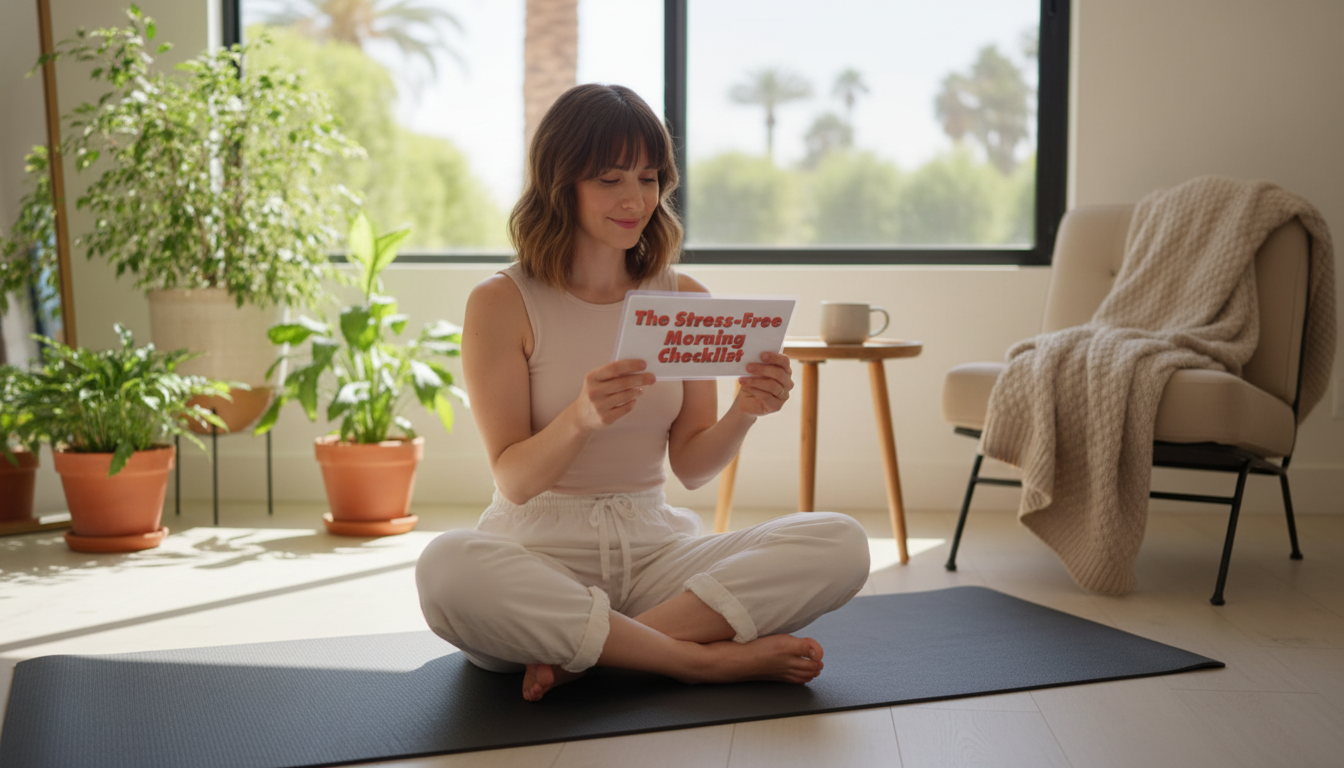
If a printable, ready-to-use version would make consistency easier, The Stress-Free Morning Checklist: Your Calming Guide to a Peaceful, Energized Start keeps the steps visible so your brain doesn’t have to hold the routine in working memory.
Morning calm is often built the night before. The simplest approach is to create a “launchpad”—one spot where essentials live every day. Place keys, wallet, bag, headphones, and chargers there so you’re not scavenger-hunting in a half-awake state.
Next, reduce morning decisions: choose clothes (including socks and shoes), pre-pack gym or work items, and stage school items by the door. Make the first 10 minutes automatic by filling a water bottle, setting out a mug, and prepping coffee or tea. If sleep is a struggle, small changes to nighttime wind-down and a consistent wake time can help (the CDC’s sleep and sleep hygiene guidance is a practical starting point).
Finally, create a softer waking environment: keep the phone out of reach and consider using a separate alarm clock so alerts don’t hijack your attention before you’ve even hydrated.
When the morning is compressed, the first 10 minutes still matter because they set the tone for your nervous system and attention.
If you like a clear boundary between “home mode” and “work mode,” a small workstation setup can also help reduce friction once you sit down. For creators, remote workers, or anyone who needs hands-free stability for calls, the Adjustable Tabletop Phone Stand for Livestreaming & Vlogging can make that transition feel more intentional.
Optional but surprisingly effective: add one sensory cue that signals “ready.” If scent is part of your routine, Your Everyday Scent Made Simple – Daily Perfume Checklist offers an easy way to pick a consistent daily fragrance without overthinking it.
Even short bouts of movement can support mood and stress resilience; consistency matters more than intensity (Harvard Health explains why in Exercise is an all-natural treatment to fight depression).
A minimum version can take 5–10 minutes, while a fuller routine may take 30–60 minutes. The most effective routine is the one you can repeat consistently, especially on busy weekdays.
Focus on night-before prep (clothes, bags, lunch components) and keep a shared launchpad by the door. A short “family checklist” plus a calm first 10 minutes usually works better than trying to build a long routine.
Delay it until after light, hydration, and a quick breathing reset, then do a short, intentional check-in window. Using Focus/Do Not Disturb until your checklist is complete helps prevent stress spikes from alerts.





Leave a comment