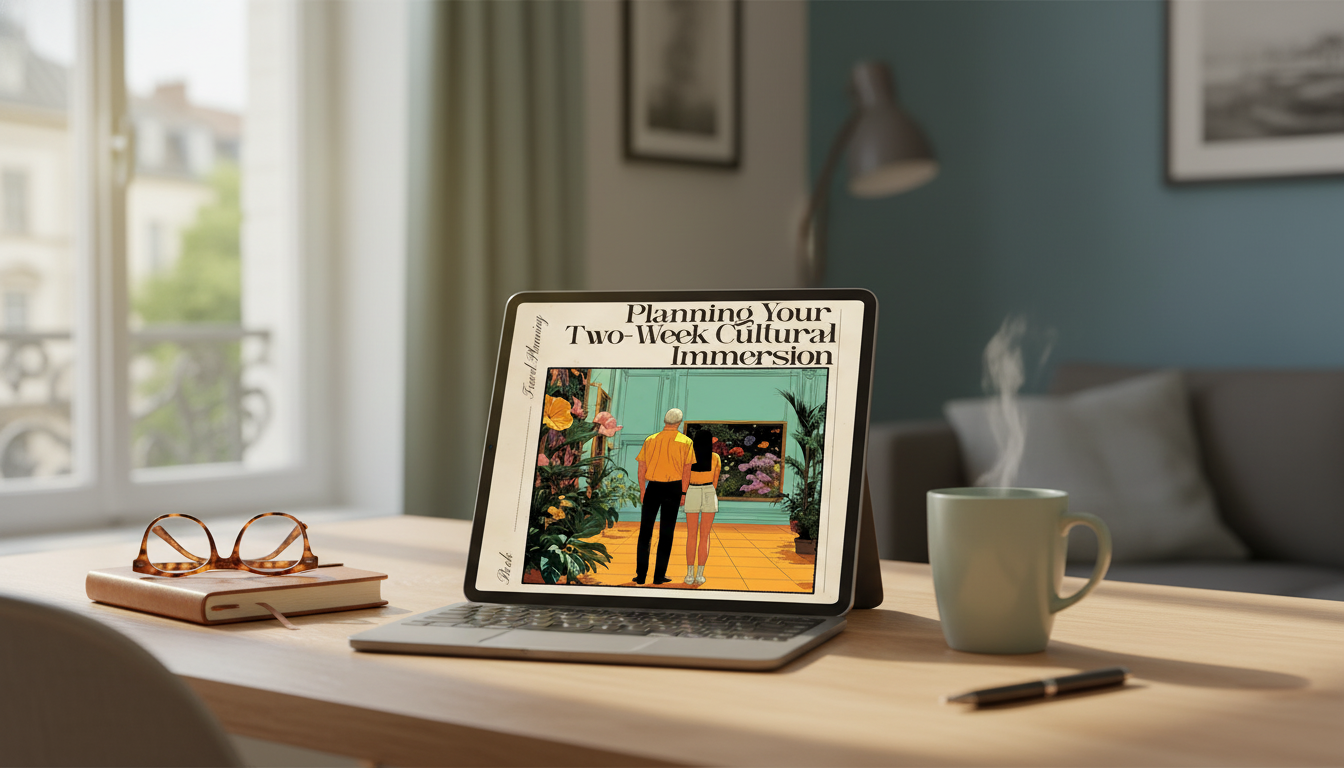
A two-week cultural immersion trip feels effortless when the days have a clear rhythm: a few anchor experiences, flexible gaps for discovery, and practical checkpoints that keep logistics from stealing time on the ground. AI Passport: Planning Your Two-Week Cultural Immersion (digital travel guide eBook) is built for travelers who want depth without overwhelm—helping shape a realistic two-week flow that balances neighborhoods, museums, markets, food traditions, and local etiquette. Use it as a planning companion to map priorities, avoid overpacking the schedule, and leave room for the moments that make a place feel lived-in rather than simply visited.
A strong two-week plan does more than list attractions. It turns your interests into a structure you can actually follow—on foot, on transit, and on days when energy isn’t perfect.
| Trip phase | Goal | Example cultural focus | Planning notes |
|---|---|---|---|
| Days 1–2 | Arrive and orient | Neighborhood walk + local market | Keep evenings light; prioritize sleep and an easy food plan |
| Days 3–6 | Deep-dive block #1 | Museum/heritage sites + guided walk | Book 1–2 timed entries; leave one open afternoon |
| Day 7 | Reset day | Park, café culture, laundry, journaling | Short list of optional add-ons if energy is high |
| Days 8–11 | Deep-dive block #2 | Food traditions + performance/art district | Plan one late night and one early morning |
| Day 12 | Day trip or regional context | Historic town/landscape + regional cuisine | Start early; build a return buffer |
| Days 13–14 | Closure + favorites | Revisit a neighborhood + gift shopping | Confirm transport, pack gradually, and keep the final evening calm |
AI Passport: Planning Your Two-Week Cultural Immersion (digital travel guide eBook) focuses on the decisions that matter most over 14 days: what to prioritize, how to pace it, and how to keep the plan organized once you land.
Hour-by-hour schedules tend to break the minute a museum line runs long or rain hits. Anchors keep the day focused without making it fragile.
If you like documenting meals, street scenes, or mini-walkthroughs, a stable setup makes a difference—especially in small hotel rooms. An Adjustable tabletop phone stand for livestreaming and vlogging helps capture steady clips for a travel diary, language practice recaps, or hands-on workshop notes.
Cultural immersion often comes from repeat exposure, not just headline attractions. Small rituals create familiarity fast—so by the end of two weeks, you know how a place “works.”
For deeper context as you choose heritage sites, UNESCO’s World Heritage Centre is a useful reference point: https://whc.unesco.org/.
For current travel updates and health guidance, use authoritative sources like the U.S. Department of State (https://travel.state.gov/) and the CDC Travelers’ Health hub (https://wwwnc.cdc.gov/travel).
When you want a simple, printable structure to follow from “big idea” to day-by-day flow, keep AI Passport: Planning Your Two-Week Cultural Immersion (digital travel guide eBook) open while you map neighborhoods, reservation needs, and your daily anchor list.
Plan anchors and neighborhoods rather than an hour-by-hour schedule. Include transit buffers and one flexible block per day so weather, closures, and energy changes don’t derail the trip.
For most travelers, 5–8 major sites is a comfortable range, depending on pace and how long you like to linger. Alternate high-effort days with lighter neighborhood days to prioritize quality over quantity.
Use backup lists grouped by area and keep a reset day so you can swap plans without redoing your whole itinerary. A reusable daily structure makes it easy to adapt while staying oriented.






Leave a comment