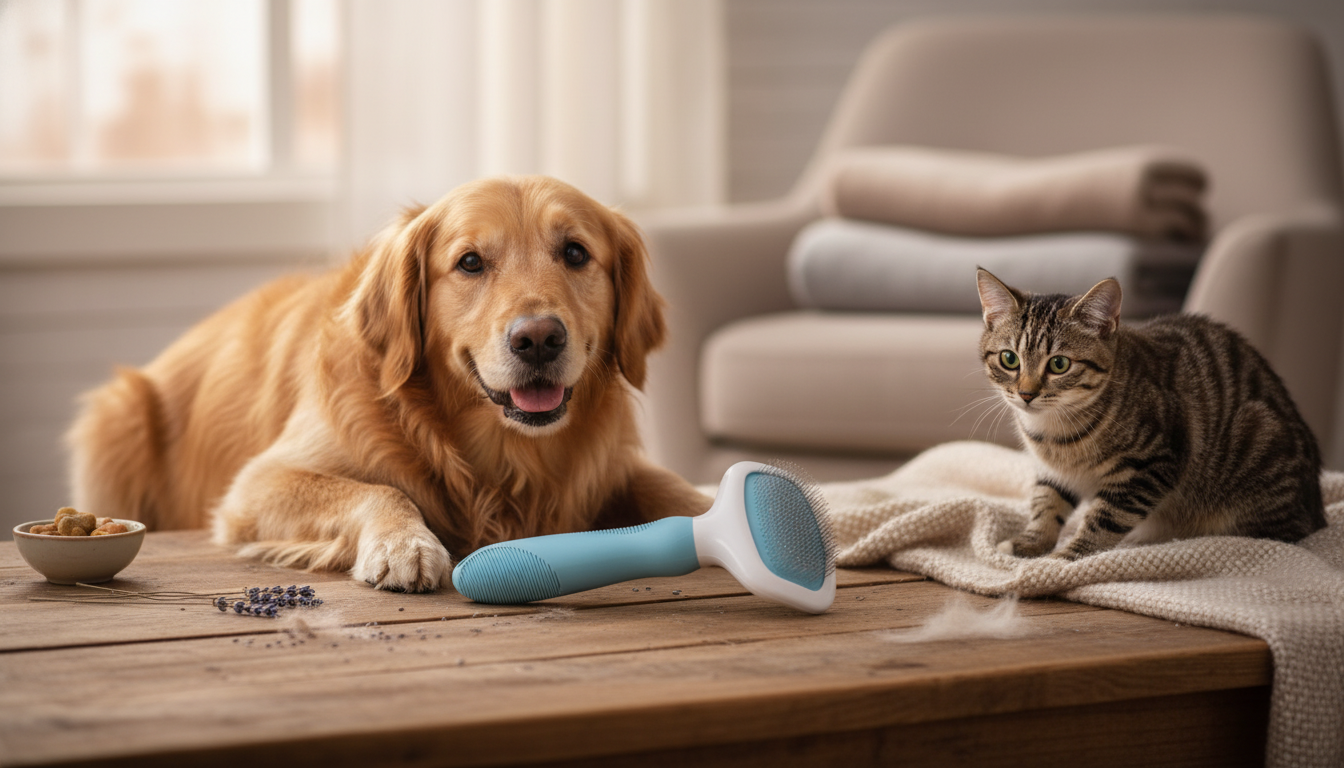
A good slicker brush can turn daily grooming from a tug-of-war into a quick, calming routine. Slicker brushing helps lift loose hair, tackle early tangles, and keep the coat looking even—without needing a full bath day to feel “fresh.” Below is a practical guide to what a slicker brush does, who benefits most, how to use one comfortably on different coat types, and how the Premium Slicker Brush for Dogs, Cats & Small Pets fits into a simple at-home grooming setup.
A slicker brush uses fine, closely spaced bristles to grab loose hair and gently separate coat fibers. Used with light pressure and short strokes, it can make a noticeable difference in just a few minutes.
For general grooming guidance and safe handling tips, see the American Kennel Club’s dog grooming overview and the ASPCA’s cat grooming tips.
| Coat type | Common issues | Brushing frequency | Technique notes |
|---|---|---|---|
| Short, smooth (e.g., many short-haired dogs/cats) | Loose shedding, dander | 1–2× weekly | Very light pressure; short strokes; stop if skin pinks up |
| Medium coat | Tangles behind ears/legs, shedding | 2–4× weekly | Work in sections; follow hair growth; check friction areas |
| Long coat | Knots and mats, dirt pickup | 4–7× weekly | Line-brush small layers; hold hair at the base to reduce pulling |
| Double coat | Seasonal blowouts, undercoat buildup | 3–5× weekly (daily in heavy shed) | Use gentle, repeated passes; don’t scrape the skin |
| Curly/wavy (often mat-prone) | Hidden mats near skin | 4–7× weekly | Brush to skin in thin layers; pair with a comb to verify |
Households with more than one pet often need a brush that works across different coat textures without turning grooming into a long event. The Premium Slicker Brush for Dogs, Cats & Small Pets is built around that everyday reality—quick touch-ups, frequent use, and a gentle approach that helps prevent tangles from becoming a “big project.”
Coat condition is also influenced by nutrition and overall health. For a straightforward primer on what supports healthy skin and fur from the inside out, consider Pet Nutrition 101: What Every Pet Parent Needs to Know.
The goal is steady, comfortable grooming—not “scrubbing.” Slicker brushes work best when the bristles do the work and your hand stays light.
If you’re unsure whether redness, flaking, or hair loss is normal shedding or a skin issue, check with a veterinarian. General skin-and-coat health information is available through veterinary resources like Cornell University College of Veterinary Medicine.
Mats usually start small in high-friction zones. Catching them early keeps grooming comfortable and prevents the need for cutting or shaving.
Yes. Many cats tolerate slicker brushing when pressure stays light and sessions remain short. Focus on friction zones (chest, behind ears, hindquarters), avoid irritated skin, and stop if your cat becomes overstimulated.
It depends on coat type and shedding season. Short coats may do well with 1–2 sessions per week, while medium/long and double coats often benefit from 3–5 sessions per week, increasing during heavy seasonal shedding.
Don’t pull through. Hold the fur close to the skin, work the ends first with tiny strokes, and spot-check progress with a comb; for tight or large mats, professional grooming is typically safer than forcing the brush.






Leave a comment