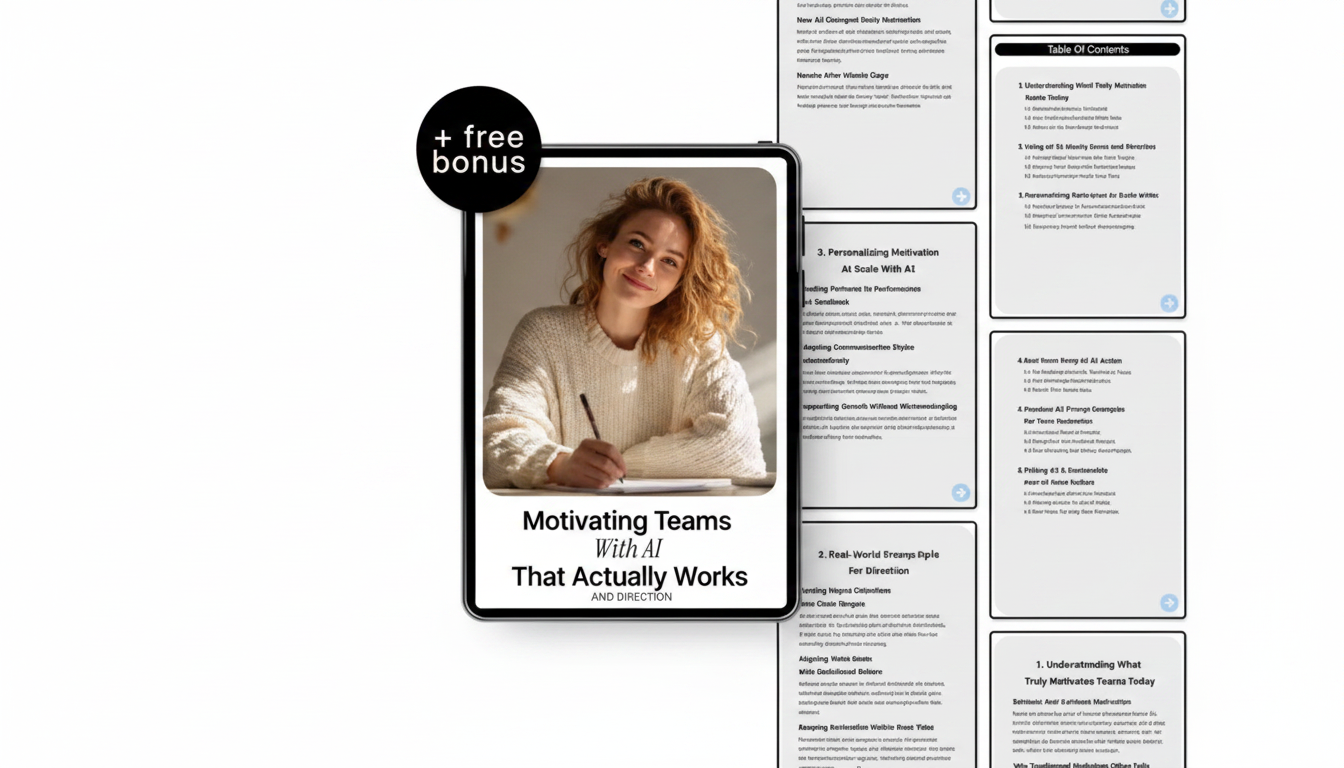
Team motivation often breaks down when goals feel abstract, feedback is inconsistent, and recognition misses what individuals actually value. Used well, AI can help leaders turn scattered signals into clear priorities, tailored encouragement, and repeatable routines—without replacing human judgment. The result isn’t “more tools,” but a lightweight system that makes progress visible, reduces coordination drag, and helps each person connect their daily work to outcomes that matter.
Most motivation problems aren’t about effort—they’re about friction, ambiguity, and missed reinforcement. AI can help surface patterns early, so leaders can address them while they’re still small.
Research consistently points to the impact of engagement and meaningful progress. Gallup’s engagement reporting highlights the business consequences of disengagement, while HBR’s work on small wins shows how steady progress fuels motivation and performance over time (Gallup, Harvard Business Review).
A practical approach is a weekly loop that captures small signals, turns them into usable insights, and produces a few concrete actions. AI’s best role here is synthesis and drafting—while managers keep judgment, context, and sensitive decisions firmly human-led.
| Step | What to collect | What AI can produce | Manager action |
|---|---|---|---|
| Weekly check-in | Top wins, top blockers, energy level (1–5) | Theme summary, risk flags, suggested follow-ups | Remove one blocker; schedule one coaching touchpoint |
| Goal review | Current priorities, progress notes, next milestones | Alignment check vs. team goals, missing dependencies | Clarify priorities; negotiate scope or timeline |
| Recognition log | Observed behaviors tied to outcomes | Draft recognition messages tailored by style | Deliver timely praise; connect behavior to impact |
| Meeting notes | Decisions, owners, deadlines | Action list, unanswered questions, dependency map | Confirm ownership; publish decisions; follow up |
| Learning plan | Skills to develop, practice opportunities | Micro-goals and practice prompts | Assign stretch tasks; provide feedback loop |
Personalization works best when it’s preference-based and transparent—never surveillance-based. The goal is supportive leadership at scale, not “monitoring.”
For deeper guidance on using AI responsibly in people decisions, MIT Sloan Management Review offers practical perspectives on support (not replacement) in leadership workflows (MIT Sloan Management Review).
Motivation rises when people can answer, quickly and confidently, “What matters most this week?” A simple “priority ladder” makes that possible:
To keep alignment lightweight, run a 10-minute weekly ritual:
For leaders who want a repeatable system (not a theory), Motivating Teams With AI That Actually Works – Digital Guide, eBook & Checklist for Boosting Team Engagement, Goal Alignment, and Personalized Motivation Using AI Tools is designed for team leads, managers, founders, project leads, and HR partners. It’s especially helpful for remote/hybrid teams, fast-growing orgs, and cross-functional groups where visibility and follow-through are constant challenges.
For managers running more video-based coaching and alignment huddles, a stable setup also helps meetings feel calmer and more professional—consider pairing your rollout with an Adjustable Tabletop Phone Stand for Livestreaming & Vlogging to reduce friction during 1:1s and quick check-ins.
Use AI for drafting, summarizing, and organizing work: meeting recaps and action lists, weekly check-in theme summaries, recognition message drafts, and suggested coaching questions. Keep performance ratings, sensitive HR decisions, and high-stakes judgments human-led.
Rely on explicit preferences (how someone likes feedback and recognition), keep inputs minimal and voluntary, and avoid monitoring behaviors. Review AI outputs before using them, and focus on observable work behaviors and impact rather than inferred traits.
Clearer priorities, fewer missed handoffs, and faster blocker removal often improve within 1–2 weeks. Engagement and consistency typically strengthen over 4–6 weeks when check-ins, recognition, and coaching happen on a steady cadence.




Leave a comment