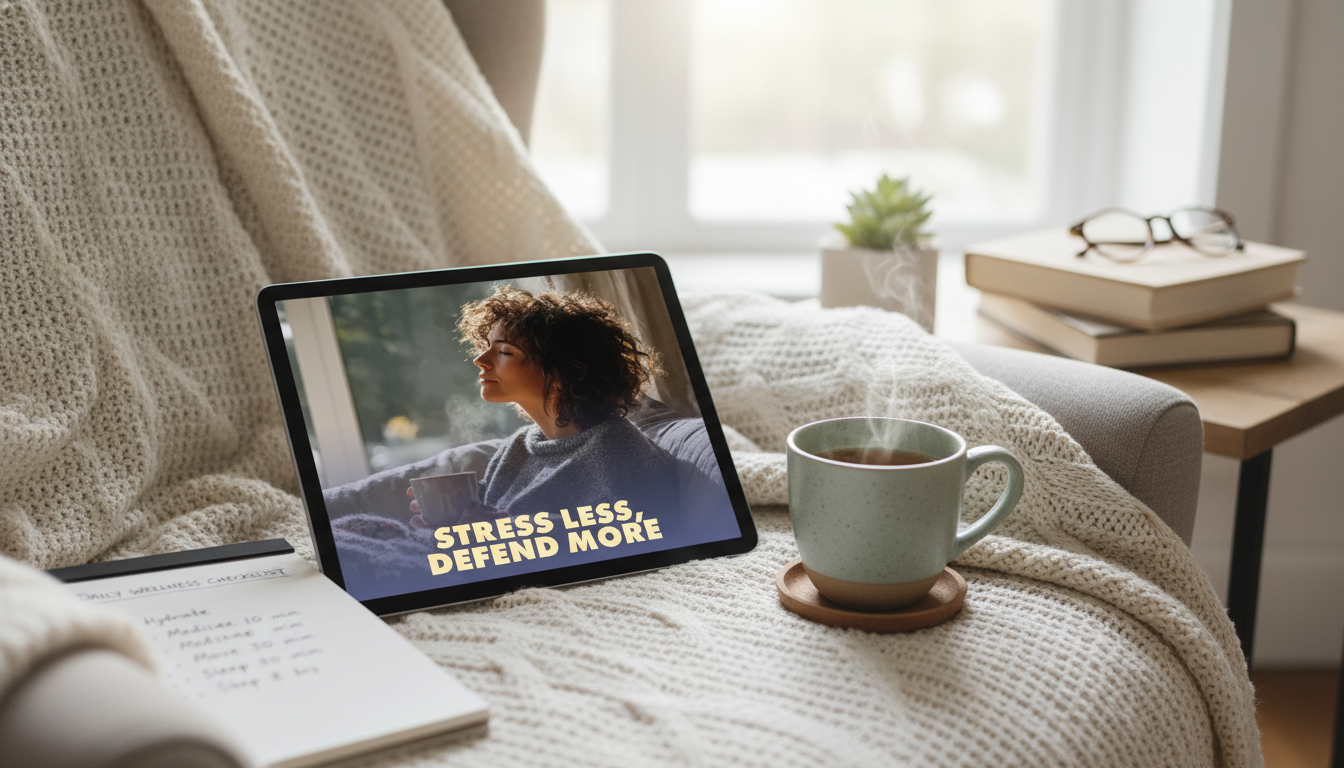
Chronic stress doesn’t just affect mood and sleep—it can also shift immune function by influencing hormones, inflammation, and everyday habits that keep defenses strong. A simple, repeatable checklist makes it easier to protect the basics (sleep, movement, nourishment, hydration, and recovery) even when life is hectic. Use the sections below to build a realistic routine, then keep a printable version on hand for quick daily check-ins.
Stress is designed to help you respond to threats, but modern stress often drags on for weeks or months. When that happens, the same systems that help you power through a deadline can make it harder to recover afterward.
For a deeper overview of how stress affects the body, see the American Psychological Association’s stress resource and Cleveland Clinic’s explainer on stress and getting sick.
When life is busy, “doing everything” tends to collapse. The most helpful approach is to protect a few high-return habits that support sleep quality, energy, and steady recovery.
Think of this as a “minimum effective dose” list. If the day goes sideways, returning to even one item helps you regain momentum without turning wellness into another chore.
| Area | Daily check | Weekly check |
|---|---|---|
| Sleep | Same bedtime window; 7–9 hours when possible | Review what disrupted sleep; adjust caffeine, screen time, or schedule |
| Nutrition | Protein at meals; colorful produce; regular meals | Grocery plan with easy staples (eggs, yogurt, beans, frozen veg, fruit) |
| Hydration | Water in the morning + throughout the day | Check if headaches/fatigue track with low fluids; add electrolytes if appropriate |
| Movement | Walk/mobility/strength in a manageable dose | One longer session outdoors or gentle conditioning |
| Stress recovery | One short reset break; brief relaxation before bed | Schedule a longer recovery block (hobby, nature, social connection) |
| Exposure habits | Hand hygiene; avoid sharing bottles/utensils | Clean frequently touched items (phone, keyboard, earbuds) |
Calming tools work best when they’re quick enough to use on a normal day—no special setup, no perfect environment required. If you want a simple place to start, pick one tool and “attach” it to an existing habit (after coffee, after dropping kids off, before opening email).
For more evidence-based stress management approaches, the NIH NCCIH stress overview is a helpful reference.
During intense weeks, consistency beats complexity. The goal is to prevent the “skipped meals + extra caffeine + late scrolling” loop that makes the next day harder.
Ongoing stress can influence cortisol and other stress pathways that affect immune signaling, and it often reduces recovery through less sleep, irregular meals, and less movement. Small, consistent habits can help support resilience without trying to remove all stress from life.
Prioritize sleep consistency, balanced meals with protein and produce, steady hydration, moderate movement, and one short relaxation break each day. Pair those with basic hygiene habits like handwashing and cleaning frequently touched items.
Some benefits—like improved sleep quality, steadier energy, and feeling less “wired”—can show up within a few days. Broader resilience tends to build over weeks when the basics are repeated consistently.





Leave a comment