Why hydration matters more than most pet parents expect
Water does far more than “quench thirst” for dogs and cats. It’s part of how the body keeps itself stable minute to minute—especially during warm weather, excitement, or recovery from illness.
- Temperature control: Dogs rely heavily on panting to cool down, which can increase fluid loss. Cats also lose moisture through normal metabolic processes, and they can overheat quickly in hot indoor spaces.
- Digestion and nutrient delivery: Water supports saliva production, digestion, and the transport of nutrients through the bloodstream.
- Kidney and urinary support: Hydration helps the kidneys filter waste efficiently and can influence urine concentration—an important factor for both dogs and cats.
- Daily comfort: Even mild dehydration can reduce stamina, worsen constipation, and make bounce-back from minor upsets feel slower.
- Different thirst drives: Cats are famous for a lower thirst drive than many dogs, so their hydration habits often need more “built-in” support rather than relying on obvious drinking.
Hydration needs also shift with life stage (puppies/kittens and seniors), activity level, pregnancy/lactation, and medical conditions. If a pet has ongoing health concerns, follow your veterinarian’s guidance closely.
Common reasons pets don’t drink enough
Low water intake is often a household setup issue—not stubbornness. Small details can make a bowl easy to ignore.
- Water isn’t appealing: Warm water, stale odor, a slippery “biofilm” on the bowl, or a strong mineral taste can turn pets off.
- Location stress: Bowls near litter boxes, noisy appliances, or busy hallways may feel unsafe or distracting—especially for cautious cats.
- Bowl design mismatch: Narrow bowls can trigger whisker stress for cats; lightweight bowls may tip for enthusiastic dogs; some plastics hold odors.
- Routine disruptions: Travel, boarding, new pets, fireworks, schedule changes, or renovations can reduce drinking temporarily.
- Dry-only diets: Pets eating mostly dry food may need more deliberate hydration habits than those eating wet food.
- Medical causes: Dental pain, nausea, urinary problems, kidney disease, diabetes, fever, and medication side effects can all change thirst and intake. Veterinary input matters here.
Simple daily routine: make drinking the easy choice
The most reliable hydration plan is a “set it and forget it” routine—built around freshness, access, and comfort.
- Refresh frequently: Replace water at least once daily; top off more often during heat waves or in multi-pet homes.
- Wash bowls routinely: Clean with soap and hot water, then rinse well so no residue remains to affect smell or taste.
- Offer multiple stations: A few water options reduce bottlenecks, especially in multi-level homes and for senior pets who don’t want to trek far.
- Optimize placement: Choose quiet, low-stress areas; keep water away from litter boxes; avoid tight corners where a pet might feel trapped.
- Try a fountain: Many cats prefer moving water. A fountain can also help reduce stagnation and make drinking more interesting.
- Add meal moisture when appropriate: Wet food or veterinarian-approved hydration toppers can increase total water intake through normal eating.
- Use positive reinforcement: Calm praise works; forcing the issue can create a long-term aversion to the bowl.
Hydration strategies by situation
Hot weather
Provide shade, avoid peak-heat walks, and offer small, frequent drinks. For summer safety guidance, see the American Veterinary Medical Association (AVMA) hot weather safety resource.
Active dogs
Offer water before and after exercise, plus short hydration breaks during activity. If a dog is overheated, avoid letting them gulp a huge volume at once; use small sips and cool-down breaks instead.
Cats that ignore bowls
Try wide, shallow dishes; test ceramic or stainless steel; and move water away from food to reduce smell-related avoidance. For cats with urinary history, reliable hydration habits can be especially important; Cornell’s feline urinary health information is a helpful starting point: Cornell University College of Veterinary Medicine.
Multi-pet households
Senior pets
Travel and outings
Warning signs: when hydration becomes urgent
For a veterinary overview of dehydration and clinical concerns, see the Merck Veterinary Manual.
Hydration check: signs, what they may suggest, and what to do next
| Sign to notice |
What it can indicate |
What to do |
| Dry or tacky gums |
Possible dehydration |
Offer fresh water; encourage small frequent sips; contact a veterinarian if persistent |
| Sudden increase in thirst |
Possible endocrine/kidney issues (among other causes) |
Measure intake for 24–48 hours; schedule a veterinary check |
| Very dark or strong-smelling urine |
Concentrated urine; dehydration or urinary concerns |
Increase access to water; consider wet food; seek veterinary advice if ongoing |
| Vomiting/diarrhea plus low drinking |
Rapid fluid loss risk |
Contact a veterinarian promptly; dehydration can worsen quickly |
| Cat rarely seen drinking |
Normal behavior for some cats, but may still be under-hydrated |
Add fountains, wide bowls, and moisture-rich meals; monitor litter box output |
A practical way to track hydration without overcomplicating it
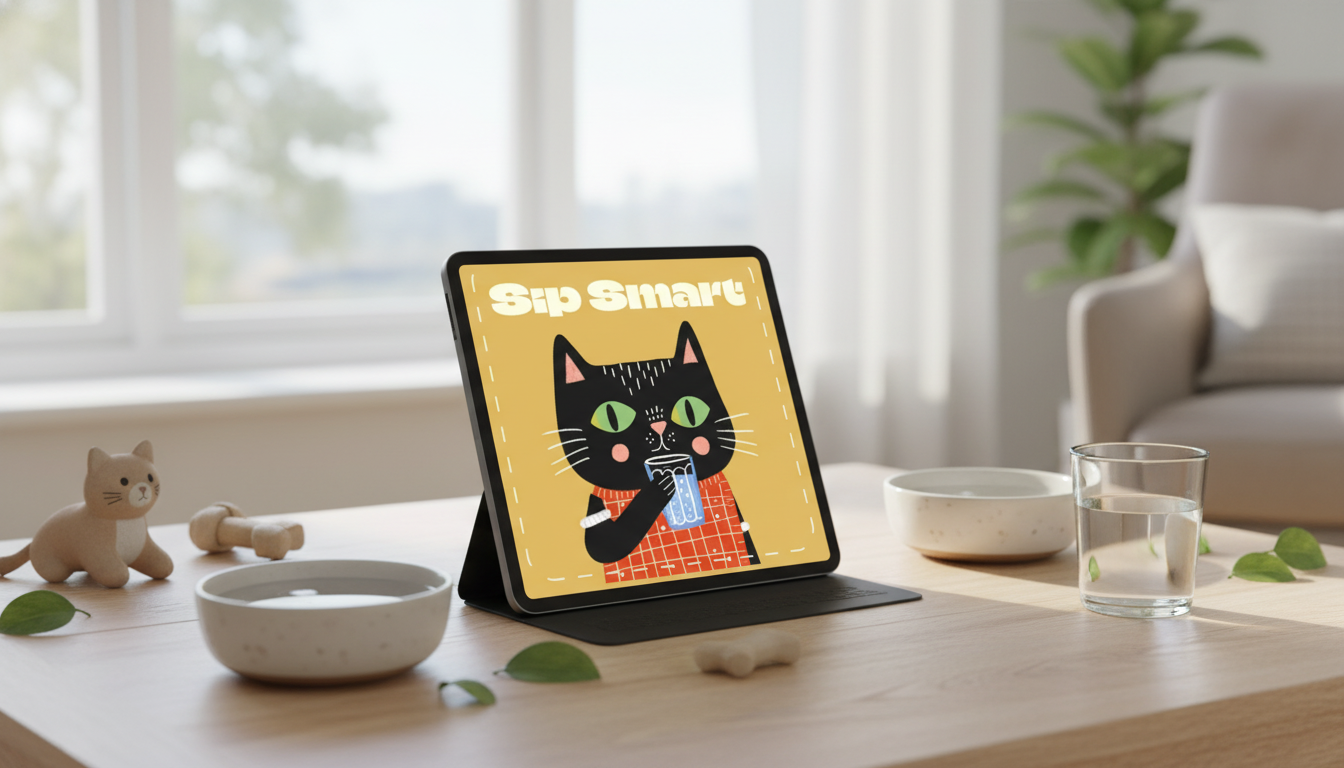
What’s inside the Sip Smart digital guide
Explore: Sip Smart: The Ultimate Guide to Keeping Your Pet Hydrated.
For feeding choices that can support moisture intake, see Pet Nutrition 101: What Every Pet Parent Needs to Know.
FAQ
How can a picky cat be encouraged to drink more water?
Try wide, shallow bowls (to reduce whisker stress), place multiple water stations in quiet areas, and keep water fresh and cool. Many cats drink more with a fountain or when water is separated from food. If low intake continues or urinary signs appear, schedule a veterinary visit.
Is wet food enough to keep a pet hydrated?
Wet food increases daily moisture intake, but it doesn’t replace free access to fresh drinking water. Needs vary by size, activity, weather, and health conditions, so monitor urine output and overall behavior and follow veterinary guidance for medical concerns.
What are early signs of dehydration in dogs and cats?
Early signs can include tacky gums, lower energy, reduced appetite, darker urine, and constipation. Urgent red flags include persistent vomiting/diarrhea, severe lethargy, collapse, or refusing to drink—contact a veterinarian promptly if these occur.
Recommended for you




Leave a comment