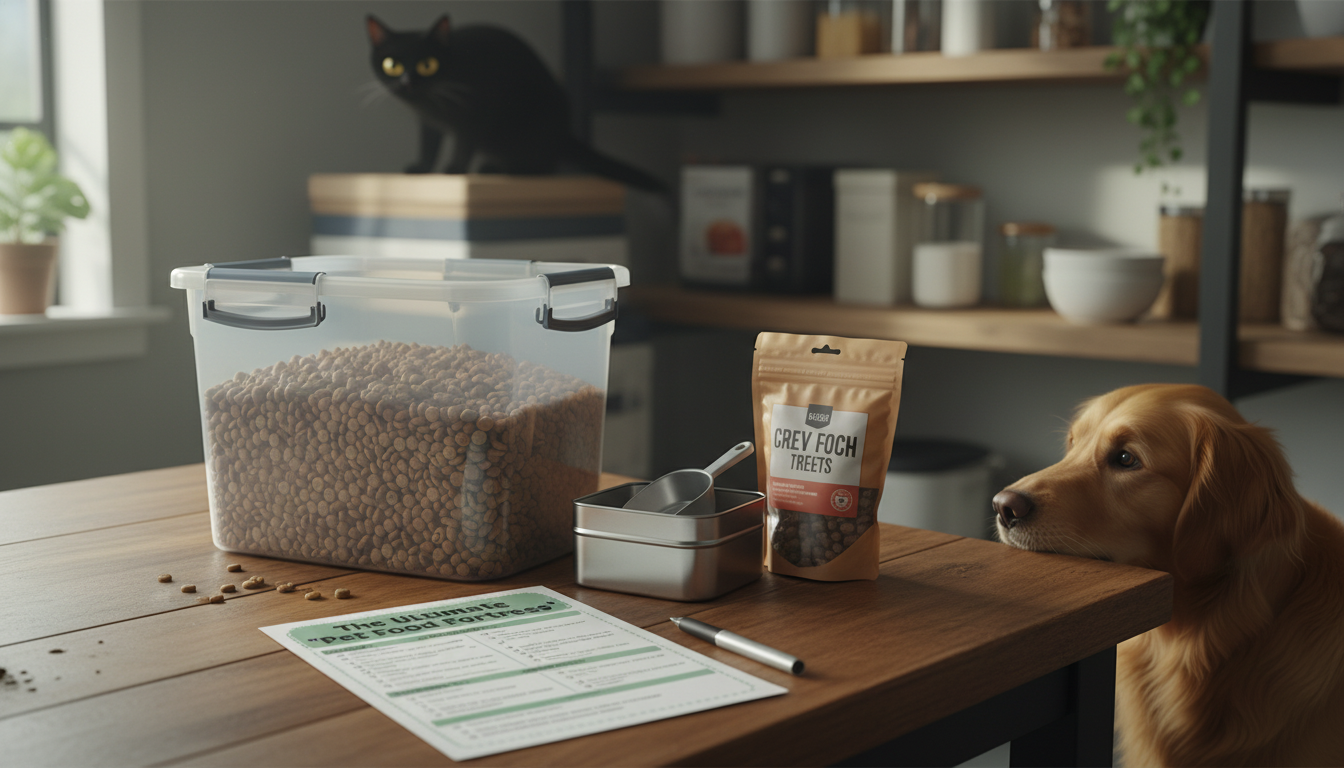
Pet food stays fresher and safer when storage is treated like a simple, repeatable routine. A “pet food fortress” approach focuses on sealing out air and moisture, keeping pests away, tracking dates, and making daily feeding smoother for both dog and cat households. Use the checklist framework below to set up an organized station, reduce waste, and help protect flavor, aroma, and nutrient quality from avoidable storage mistakes. For more guidance, see How to Build the Best Survival Food Kit for Your Pet – Wallaby Goods.
For recall awareness and safety updates, keep an eye on FDA pet food safety and recalls. It’s much easier to act quickly when your lot code and dates are still attached to the food you’re feeding. For further reading, see Stylish Dog Food Storage Solutions (& Free Printable Labels!).
If you want a ready-to-print routine you can tape inside a pantry door, see The Ultimate “Pet Food Fortress” Checklist (printable digital guide).
| Storage method | Pros | Watch-outs | Good for |
|---|---|---|---|
| Original bag folded/clip-sealed | Keeps lot/date visible; no extra container needed | Seal quality varies; bag can tear; pests can chew through | Short-term use and small bags |
| Original bag placed inside airtight bin | Double barrier; easy organization; better pest control | Bin must be truly airtight; crumbs on rim reduce seal | Most households; multi-pet routines |
| Food poured into airtight bin | Fast daily scooping; tidy look | Must relabel dates; requires full cleaning between refills | High-volume feeders who label diligently |
| Single-serve portions (pre-portioned bags/containers) | Prevents repeated air exposure; great for travel | More packaging/containers to manage | Boarding, trips, busy weeks |
For additional handling guidance, review AVMA pet food safety recommendations, particularly around hygiene and avoiding cross-contact with chemicals.
If you’re also refining what you feed (not just how you store it), Pet Nutrition 101: What Every Pet Parent Needs to Know pairs well with a fortress-style storage routine because it helps you keep formulas, life stages, and portions straight.
For rodent prevention basics that support your “fortress,” follow practical steps from the CDC guide to preventing rodents in and around homes, especially sealing entry points and reducing accessible food sources.
Keeping kibble in the original bag helps retain the lot code and best-by date, and the bag itself adds a protective barrier. For many homes, placing the original bag inside an airtight container balances convenience with traceability. If you pour kibble into a bin, relabel dates immediately and fully clean and dry the container between bags.
Empty, wash, and completely dry the bin between new bags to avoid old oils and crumbs contaminating fresh food. A quick weekly wipe for dust and crumbs helps maintain the seal, and a monthly deeper clean is a smart baseline—especially in humid climates or busy multi-pet households.
Cover and refrigerate opened wet food promptly using a clean can cover or an airtight container, and label the date/time it was opened. Discard it if you notice unexpected odor, color, or texture changes, and follow the manufacturer’s “use after opening” guidance on the label.





Leave a comment