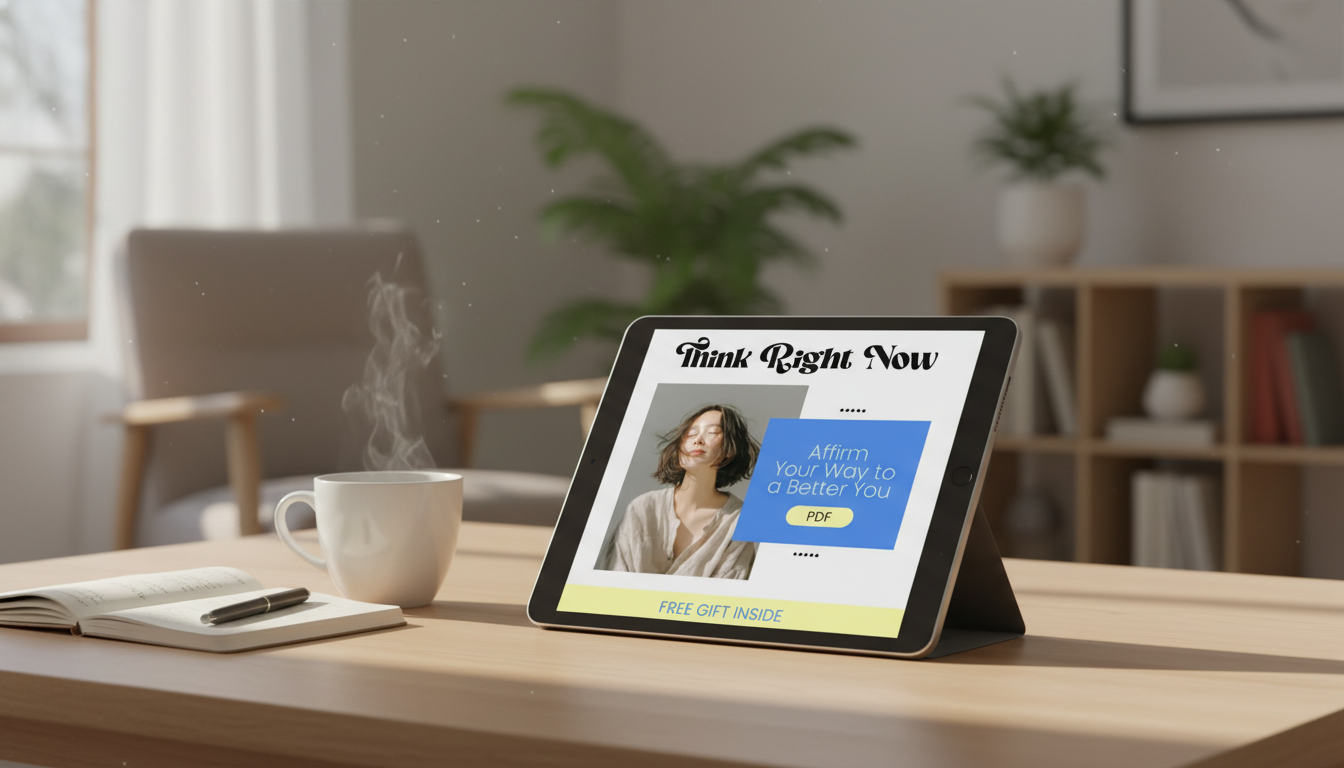
Small shifts in attention and self-talk can change how a day feels. Think Right Now: Affirm Your Way to a Better You – Digital eBook Guide on Affirmations and Mindfulness is designed to help build steadier habits through affirmations and mindfulness—without long sessions, special tools, or a complete lifestyle overhaul. The rhythm is simple: notice what’s happening, choose a better thought on purpose, and repeat until it becomes easier to return to calm and clarity.
Mindfulness is widely used to support stress management and well-being, and reputable health organizations describe it as an accessible skill that can be practiced in brief moments throughout the day. For background and research summaries, see the American Psychological Association’s overview of mindfulness and the National Center for Complementary and Integrative Health guide.
When life is busy, the hardest part is often consistency. This guide focuses on short, repeatable steps that fit into real schedules while still feeling personal and useful.
If you like having a quick reference you can open on your phone in seconds, a digital format makes it easier to return to the same prompts daily—especially when you’re tired, distracted, or already stressed.
Affirmations tend to “work” best when they reduce inner resistance. Instead of jumping straight to statements that feel unrealistic, aim for language that matches today’s reality while pointing forward.
| Style | Example | Best time to use | Why it works |
|---|---|---|---|
| Identity-based | “I am resilient.” | Morning start | Sets a tone for choices and behavior |
| Process-based | “I’m practicing calm responses.” | During stress | Feels believable while building a new habit |
| Choice-based | “I choose one helpful thought now.” | Overthinking loops | Creates a clear next step |
| Compassion-based | “I can be kind to myself today.” | After setbacks | Reduces shame and supports recovery |
A practical way to test an affirmation is the “70% rule”: if it feels about 70% believable, it’s usually strong enough to guide your attention without triggering a mental argument. Over time, the goal is not perfection—it’s a faster return to center.
Mindfulness doesn’t have to mean long meditation sessions. Micro-practices are short, intentional pauses that interrupt autopilot and create just enough space to respond instead of react.
For a straightforward public-health description of mindfulness and everyday use, the NHS mindfulness guide is a helpful overview.
Consistency gets easier when the plan is simple enough to follow on “average” days. Here’s a light 7-day structure that builds momentum without adding pressure.
Many people stick with mindfulness longer when they connect it to daily cues. If you enjoy pairing routines with small sensory anchors, consider using Your Everyday Scent Made Simple – Daily Perfume Checklist as a light, low-effort way to build a “start-of-day” ritual. Then keep your core practice in one place with Think Right Now: Affirm Your Way to a Better You – Digital eBook Guide on Affirmations and Mindfulness for quick check-ins whenever you need them.
Changes are usually gradual, and consistency matters more than session length. Many people notice small shifts first—less reactivity, quicker resets, and an easier time catching negative loops.
Use process-based or compassion-based wording (like “I’m learning to…”), lower the intensity, and pair the statement with a grounding breath. Avoid absolutes and focus on a believable next step in this moment.
Yes. It can complement therapy or coaching by giving you a simple routine to practice between sessions, as long as you continue following your professional’s guidance for your specific situation.





Leave a comment