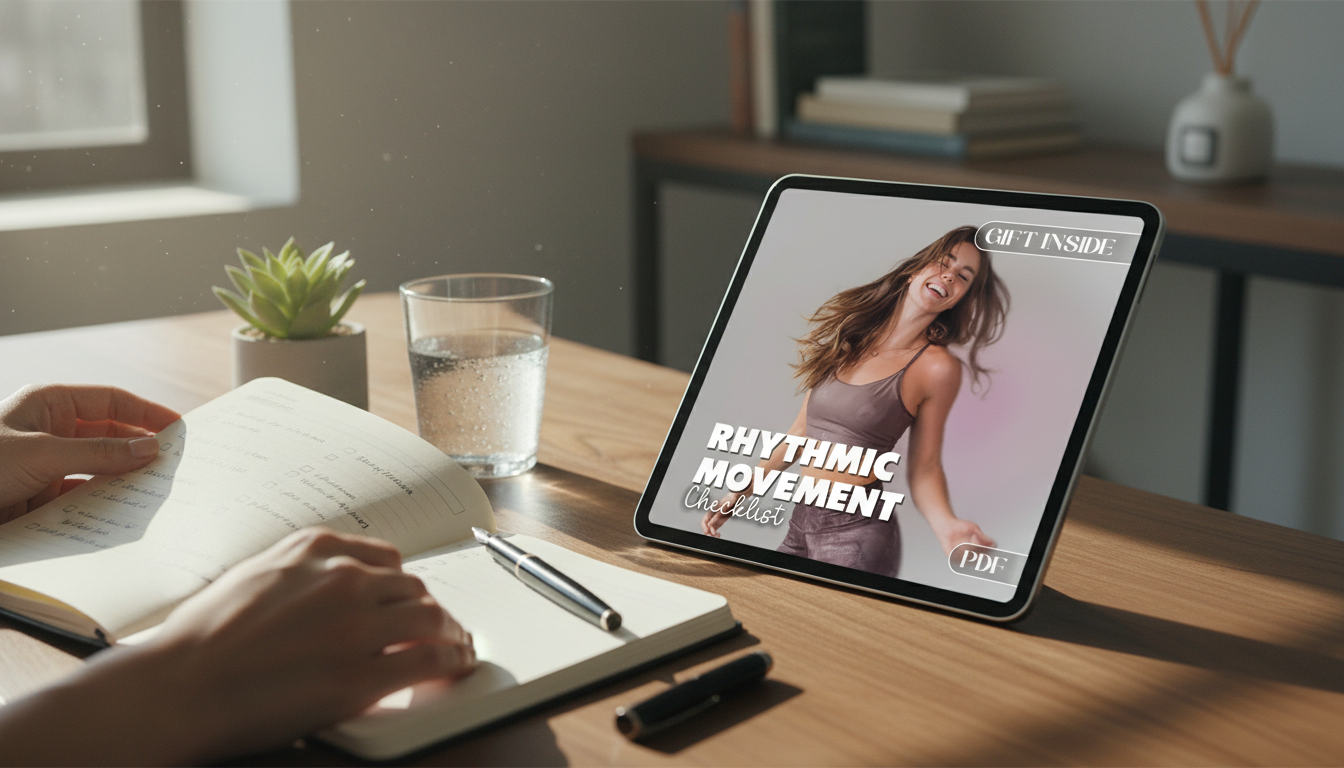
Focus often improves when the body gets a steady, repeatable rhythm—especially during long desk sessions, study blocks, or creative work. Instead of waiting until attention completely unravels, a short “rhythm reset” can help reduce restlessness and bring you back to a clear next step. The Focus Flow: Rhythmic Movement Checklist (digital download) is designed for real schedules: quick prompts you can repeat throughout the day without turning your break into a whole new project.
Rhythmic movement is simple, repeatable motion that feels steady rather than intense. Think small patterns you can do for a minute or two—enough to reset your system and return to the task without losing momentum.
The goal is consistency: a predictable “pattern” your body recognizes as a cue to settle, start, or switch gears.
When attention slips, the immediate challenge is often internal noise—mental fatigue, fidgeting, or that scattered feeling where you keep rereading the same line. Gentle movement can help interrupt that loop.
For broader context on movement and health, see the CDC’s overview of physical activity basics and Harvard Health’s summary of how exercise can support memory and thinking.
This digital download is built to remove friction—so you can stop overthinking the reset and simply do it.
If your workflow includes video meetings or content creation, pairing your reset routine with a stable setup can help you return to work smoothly. The Adjustable Tabletop Phone Stand for Livestreaming & Vlogging can keep calls hands-free while you do subtle, quiet movements off camera or between meetings.
A rhythm reset works best when it’s small, timed, and followed by one clear next action. The checklist is meant to become a repeatable loop you can trust.
| Moment | Rhythmic movement (examples) | Duration | Best for |
|---|---|---|---|
| Starting a work block | March in place, step-touch, gentle sway | 60–90 sec | Initiating momentum |
| Mid-task drift | Walk a short loop, alternating heel taps, shoulder rolls in rhythm | 45–75 sec | Re-centering attention |
| Post-lunch slump | Brisk hallway walk, rhythmic stair steps (easy pace) | 2–4 min | Energy and alertness |
| High-stress moment | Rocking, paced breathing with slow sway, light tapping pattern | 60–120 sec | Reducing agitation |
| End-of-day transition | Slow walk, gentle side-to-side sway, stretch pulses | 2–5 min | Switching off and closing loops |
You don’t need a gym—or even a private room—to use rhythmic movement effectively. Many of the best options are subtle and desk-friendly.
For an extra “transition cue,” some people like pairing their reset with another simple ritual (like re-centering their workspace). If you enjoy routine-based prompts, Your Everyday Scent Made Simple – Daily Perfume Checklist can be used as a quick personal reset before stepping into meetings, study sessions, or creative work.
If you’re trying to sit less overall, the NHS guidance on moving more and sitting less can be a helpful framework alongside short, frequent resets.
Most resets fall between 30 seconds and 5 minutes. Starting with 60–90 seconds is usually enough to notice a shift, then you can adjust based on your schedule and how alert you feel afterward.
No—rhythmic movement can be done silently with bodyweight only, like marching in place, toe taps, or a gentle sway. Music is optional if it helps you keep a steady pace, but it isn’t required.
Yes—choose subtle, quiet options such as toe taps, a gentle sway, or under-desk marching. Keeping the movement low-visibility and low-noise makes it easier to reset without pulling attention from the call or the room.






Leave a comment