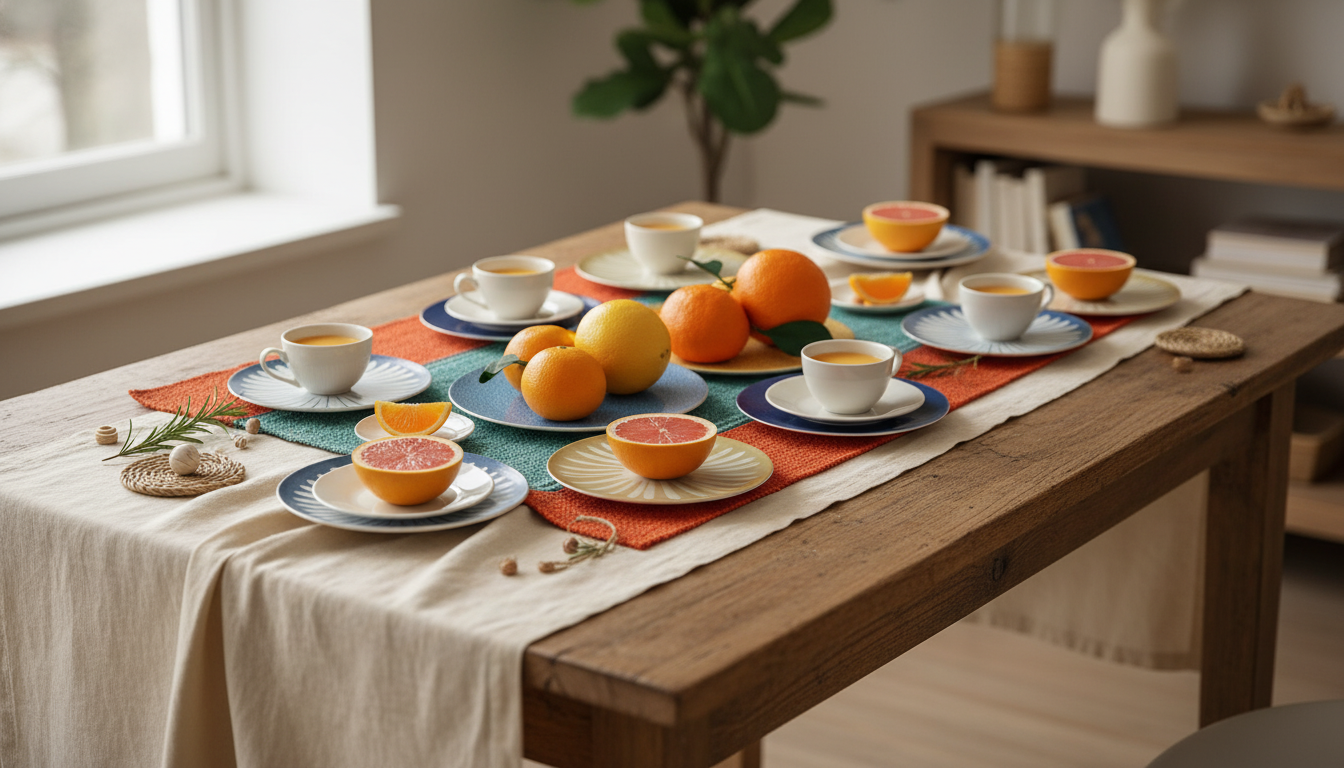
Layered texture is what turns a table from “set” to “styled”: soft next to sleek, matte against shine, low pieces balanced with height, and a cohesive palette that still feels natural. Use the checklist below to build a cozy, rustic, modern, or elegant tablescape that looks intentional from every seat—without overcrowding the place settings.
Before you pull out plates and candles, decide what the table should feel like. A clear mood keeps the base layers consistent, while smaller accents can shift with the season.
| Style | Base Textures | Accent Textures | Best Centerpiece Direction |
|---|---|---|---|
| Cozy | washed linen, soft cotton | ceramic, warm wood | low, clustered candles + small buds |
| Rustic | raw wood, burlap/linen | stoneware, hammered metal | foraged greenery + vintage vessels |
| Modern | crisp cotton, smooth stone | clear glass, black metal | single sculptural element + negative space |
| Elegant | sateen/linen blend, fine porcelain | crystal, polished brass/silver | tall taper rhythm + floral focal |
Layering works best when the foundation goes down first and the “sparkle” comes last. This order helps prevent clutter and keeps every place setting functional.
For a ready-to-use, printable version you can keep in a hosting drawer, see How to Create a Layered Texture Tablescape – Step-by-Step Checklist.
A single-page checklist helps set the layers in order: base textile → placemat/charger → plates → napkin → flatware → glassware → centerpiece (low-to-high) → micro-details → final edit. If you want a quick, repeatable setup for weeknights and holidays, the downloadable guide keeps everything in one place: How to Create a Layered Texture Tablescape – Step-by-Step Checklist.
To capture your finished table for invitations, menus, or hosting photos, an adjustable desktop stand can help you frame overhead shots steadily: Adjustable Tabletop Phone Stand for Livestreaming & Vlogging.
If you’re unsure where everything goes, a classic reference for place setting basics is the Emily Post Institute table setting guide. And if you’re using tapers or votives, follow common-sense precautions and review the NFPA candle safety guidance for placement and supervision.
Start with textiles (a runner plus cloth napkins), add one reflective element (glassware or a metal accent), and use a simple low centerpiece like greenery and a few candles. Repeat one small detail three times—like bud vases or herb sprigs—to make the table feel cohesive.
Keep most centerpiece elements low (roughly under 10–12 inches) so sightlines stay open, or go very tall and narrow (like tapers) so the visual interest sits above eye level. Avoid wide, bulky arrangements at conversation height.
Limit the table to one main pattern, keep the palette tight (two neutrals plus one accent), and add variety through finishes—matte, glossy, and organic—rather than multiple competing prints.




Leave a comment