Solo Traveler’s Guide to Staying Safe: Practical Planning, Street Smarts, and a Ready-to-Use Checklist
Solo travel can feel freeing and empowering, but it also asks for a different kind of preparation. A good safety plan blends simple routines (like where essentials are stored), smart decisions (like how to choose transport after dark), and a few “if this happens” backups. Use the sections below to build a personal travel security system that fits the destination, your comfort level, and your itinerary—without turning the trip into a stress project.
Start with a safety baseline before booking
Safety starts long before you land. A little planning upfront reduces rushed decisions when you’re tired, jet-lagged, or navigating a new place for the first time.
- Check current advisories and common scams: Review the U.S. Department of State travel resources and scan recent traveler reports for recurring issues like fake taxis, distraction theft, or ATM tampering.
- Map arrival logistics: Know your landing time, the official pickup area, and the exact route to your lodging. Create a backup option in case your train is delayed or your ride cancels.
- Choose neighborhoods intentionally: Prioritize well-lit streets, walkability, late-night transportation, and buildings with 24/7 staffing when possible.
- Share a “trip skeleton”: Send flight numbers, lodging address, and a check-in cadence (daily or every two days) to a trusted contact.
- Set your personal risk threshold: Decide what’s “daylight only,” what needs a guide, and what you’ll skip without a buddy (remote hikes, isolated beaches, late arrivals).
Secure your identity, money, and devices
Most travel disruptions aren’t dramatic—they’re practical problems like a lost phone or a missing card. A layered setup keeps one mistake from becoming a trip-ending emergency.
- Keep documents in two forms: One physical backup stored separately, and one secure digital backup (encrypted or in a locked vault).
- Use layered access on devices: Strong passcodes, biometrics, and two-factor authentication for email and banking.
- Separate payment methods: One primary card, one backup card stored elsewhere, plus a small emergency cash reserve.
- Minimize exposure: Avoid flashing your phone at curbside; keep cables and chargers organized so you don’t leave them behind in cafés or rides.
- Set rapid-response controls: Turn on device tracking, confirm remote wipe works, and know exactly how to freeze your cards fast.
Quick security setup checklist (set before departure)
| Item |
Set it up like this |
Why it matters |
| Phone lock screen |
Strong passcode + biometrics; hide sensitive notifications |
Reduces access if the phone is grabbed |
| Account protection |
Enable two-factor authentication on email/banking |
Email control can reset other accounts |
| Device recovery |
Turn on Find My/Find Device; test location sharing |
Speeds up recovery and supports police reports |
| Payment backups |
Carry 2 cards stored separately + small cash |
Prevents being stranded after a single loss |
| Document copies |
Photo/scan passport, ID, visas; store securely |
Helps replace documents and file claims |
Choose lodging with safety in mind
Your lodging is your home base. A “nice” room matters less than reliable access control and a layout that makes you feel comfortable coming and going.
Move around confidently: day, night, and transit hubs
Situational awareness without anxiety
Health and personal safety essentials
- Know emergency numbers and care options: Save local emergency numbers and identify an urgent care option ahead of time. For health guidance and destination notices, use CDC Travelers’ Health.
- Carry a small, realistic kit: Basic first aid, prescriptions (with copies), and destination-specific items like repellent or blister care.
- Stay hydrated and fed: Fatigue and low blood sugar can reduce judgment and reaction time.
- If drinking, set rules: Cap intake, watch your drink, and keep a direct route home planned.
- For outdoor activities: Leave a route note, carry water, and avoid solo routes beyond your experience level.
If something goes wrong: a simple response plan
- Lost phone: Get to a safe indoor space, use a backup device or hotel computer, lock accounts, and notify your emergency contact.
- Stolen wallet: Freeze cards, file a local report if needed for insurance, and use stored document copies for replacements.
- Harassment: Move to staffed, well-lit areas; call attention if necessary; document details when safe. For broader travel safety guidance, see INTERPOL’s travel safety advice.
- Medical issue: Contact local emergency services or a recommended clinic; message your check-in contact with your location and plan.
- Keep one “break-glass” list offline: Emergency numbers, lodging address, and key contacts written on paper.
Printable, packable help: safety tips and checklist in one place
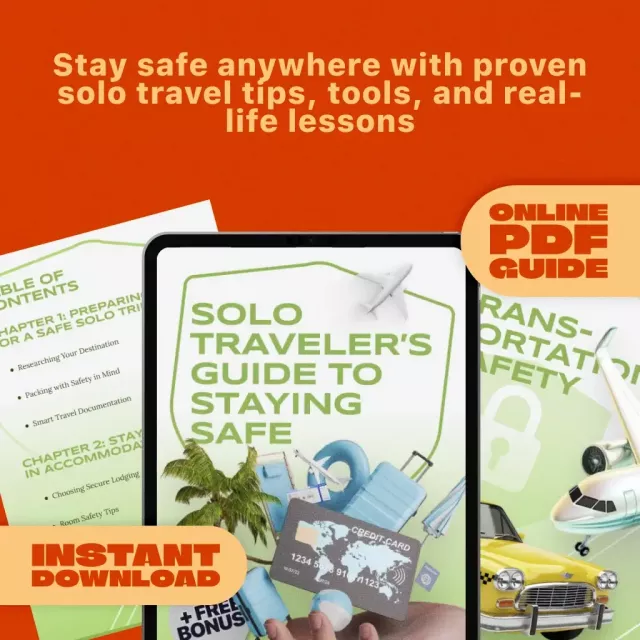
If you want something ready to use, the Solo Traveler’s Guide to Staying Safe (Digital Download PDF eBook) includes solo travel safety tips, a practical checklist, and planning support you can reference before and during your trip.
For smoother check-ins and video calls from your lodging (especially if you’re coordinating with family or working remotely), consider the Adjustable Tabletop Phone Stand for Livestreaming & Vlogging—a simple way to keep your hands free while you confirm directions, share your location, or talk through plans.
FAQ
What are the most important safety steps for first-time solo travelers?
Start with a solid arrival plan, choose lodging with reliable access control, and set up document/payment backups. Lock down your phone with strong security, and keep a simple check-in routine with someone you trust.
How can a solo traveler stay safe at night without skipping nightlife entirely?
Preset transportation, stick to well-lit routes and staffed venues, and keep enough battery (or a backup power option) for navigation. Limit alcohol, avoid wandering while distracted, and leave early if the vibe shifts.
What should be kept on paper in case a phone is lost or stolen?
Write down your lodging address, local emergency number, embassy/consulate contact, key phone numbers, and insurance details. Include basic instructions for contacting your bank and accessing backup funds.
Recommended for you




Leave a comment