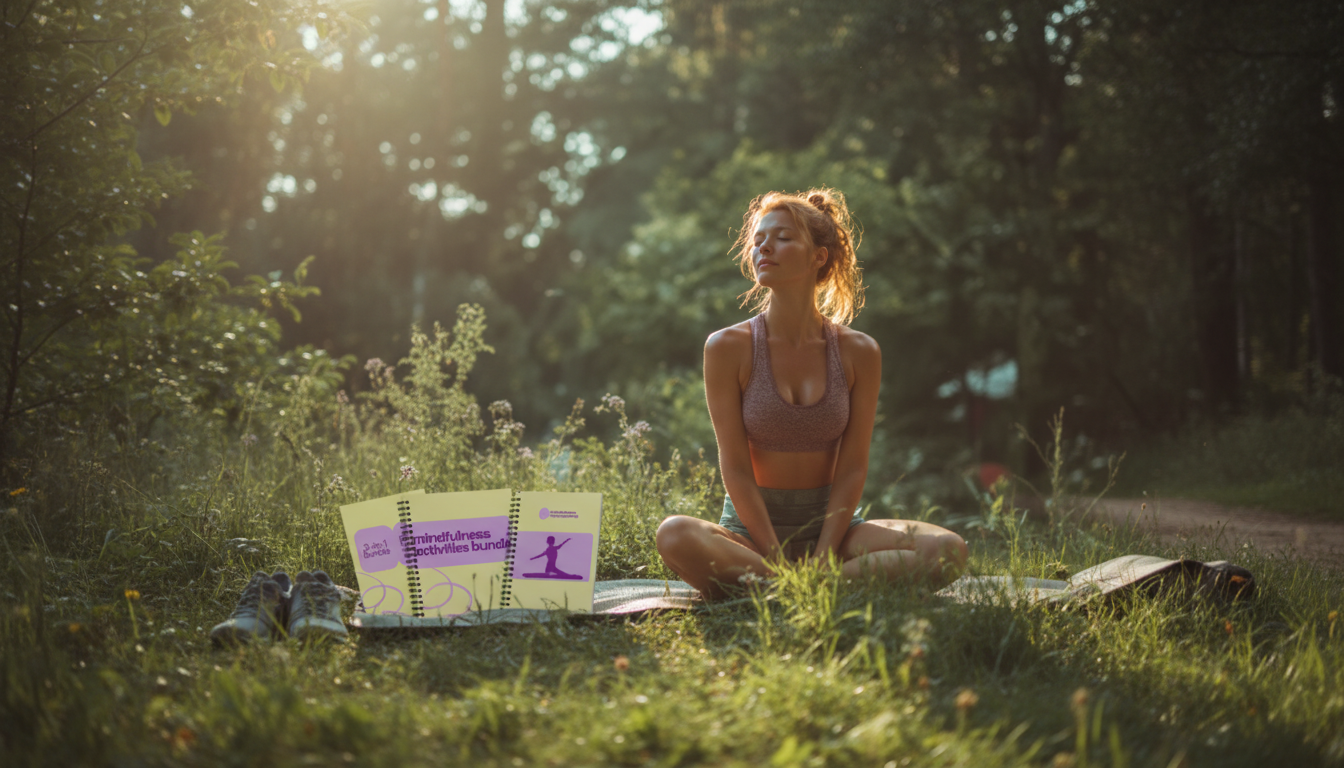
A flexible mindfulness routine is easier to keep when it fits real life: a short walk between errands, a few yoga poses before bed, or a quiet sit to reset your attention. The Mindfulness Activities Bundle – 3-in-1 Digital Guides for Walking, Yoga, & Meditation is designed to make that flexibility simple—clear steps, gentle prompts, and options that work across different energy levels and schedules.
Mindfulness is widely used for stress support and attention training, and it can be practiced through movement or stillness. For background on mindfulness and stress reduction, see the Mayo Clinic overview of meditation for stress and the NCCIH summary of mindfulness effectiveness and safety.
This set combines three practice styles that build the same core skill—present-moment attention—without forcing you into a single routine.
| Current need | Walking guide option | Yoga guide option | Meditation guide option | Suggested time |
|---|---|---|---|---|
| Restless mind, excess energy | Brisk mindful walk with footstep counting | Standing flow with steady breath pacing | Open-monitoring with sound as anchor | 10–20 min |
| Low energy, mental fog | Slow sensory walk (colors, textures, temperature) | Gentle floor sequence with long exhales | Body scan with support under knees | 5–15 min |
| Stress spike, tight chest | Breath-synced walking (inhale/exhale steps) | Heart-opening poses with extended exhale | Box breathing then quiet sitting | 3–12 min |
| Overwhelmed, too many tasks | Single-point focus walk (one sense at a time) | Simple repeated sequence for predictability | Noting practice (label thoughts, return) | 5–10 min |
| Need better sleep wind-down | Sunset/low-light walk with soft gaze | Slow stretches with longer holds | Guided relaxation or counting down breaths | 10–25 min |
Used together, these three formats help you practice the same mental “rep”—notice, return, and begin again—while matching your day. If sitting still feels difficult, movement can be the on-ramp; if the body feels over-stimulated, a brief seated anchor can become the reset.
If you like following guidance on-screen without juggling your device, an Adjustable Tabletop Phone Stand for Livestreaming & Vlogging can help keep instructions visible during yoga or seated practice.
For a simple “daily ritual” pairing, some people like adding a small sensory cue—like a consistent scent before practice. A lightweight option is the Your Everyday Scent Made Simple – Daily Perfume Checklist to help standardize that cue without overthinking it.
| Practice type | Space needed | Equipment | Best time of day | Beginner starting point |
|---|---|---|---|---|
| Walking mindfulness | Small outdoor loop or indoor hallway | Comfortable shoes (optional) | Morning or midday | 5 minutes, one sensory anchor |
| Yoga mindfulness | Mat-sized area | Mat or towel; cushion (optional) | Morning or evening | 3–5 poses, slow breathing |
| Meditation | Quiet seat or chair | Cushion/blanket; timer | Evening or after walking | 2 minutes, breath counting |
Walking mindfulness can be a complete practice on its own, especially when it helps you stay present more consistently. Seated meditation adds a different layer—stillness can make it easier to notice thoughts and reactions—so alternating based on context and energy often works best.
A realistic baseline is 3–5 days per week or a daily micro-session, focusing on consistency over duration. Starting with 5 minutes and adding 1–2 minutes weekly is a simple progression; some stress relief can show up quickly, while deeper habit change typically takes weeks.
Use modifications such as shorter holds, reduced range of motion, or chair-based options, and prioritize breath and sensation awareness over “perfect” form. If there are medical concerns, it’s best to consult a clinician or physical therapist and lean more on walking or meditation when movement is restricted.




Leave a comment