
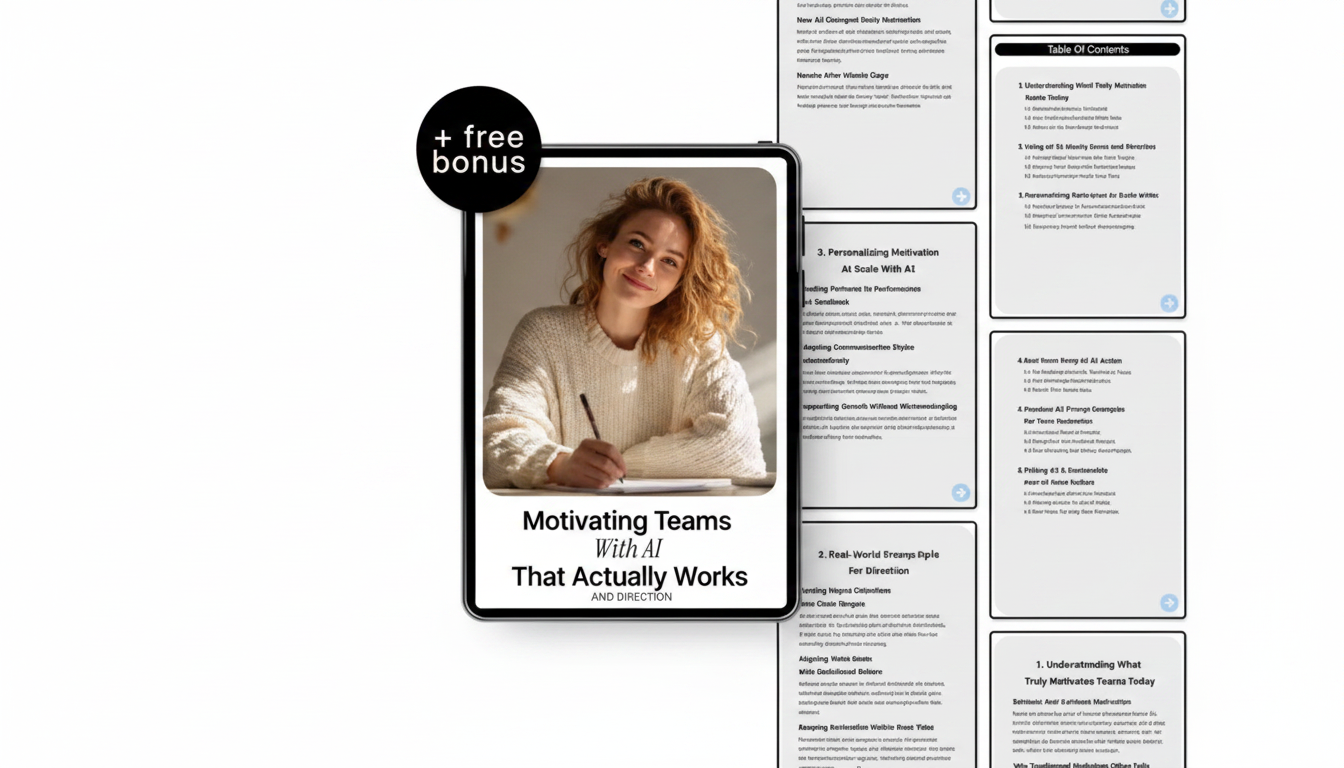
Keeping up with content demands across social, email, and search can drain creative energy fast. Spark Marketing with AI is a lightweight digital guide built to help marketers generate fresh angles, organize campaigns, and refine messaging with ready-to-use frameworks—so brainstorming becomes a repeatable system instead of a last-minute scramble.
When ideas feel scattered, speed usually makes things worse: more drafts, more second-guessing, and more “almost right” concepts. This guide focuses on turning the messy middle of marketing into a clear, repeatable flow.
For teams juggling launches, always-on content, and retention messaging, the real win is consistency: a reliable way to create options, pick the best direction, and ship.
The most useful creative systems don’t depend on a single “big idea.” They create many good options quickly—and make it easy to improve the best ones without rewriting everything from scratch.
These building blocks are designed to keep your work specific and human—especially when paired with real differentiators, real examples, and clear boundaries for what you can and can’t claim. For guidance on keeping content people-first and genuinely useful, Google’s approach is a strong reference point: Google Search Central — Creating helpful, reliable, people-first content.
Great campaigns often start as one “hero” message and then branch into multiple channel versions. The guide supports that approach by helping you produce channel-native drafts quickly, then refine based on performance.
| Channel | Fast outputs | Best used for | What to provide to the AI first |
|---|---|---|---|
| Social | 10 hooks, 5 post angles, 3 scripts | Consistent weekly content and series | Audience pain, desired outcome, brand tone, platform |
| Subject lines, CTA variants, sequence outline | Launches, onboarding, retention | Offer, segment, objection list, proof points | |
| Content | Outlines, FAQs, refresh ideas | Evergreen education and intent-based pages | Core topic, reader level, unique POV, examples to include |
| Landing pages | Headline/value prop sets, section copy | Improving clarity and conversion | Primary benefit, differentiators, testimonials, risk reducers |
Speed is helpful only when quality stays high. A practical workflow keeps teams aligned and reduces revision loops.
When writing for real humans skimming on real screens, clarity beats cleverness. Nielsen Norman Group’s research on scannable, web-friendly writing is a useful standard to follow: Nielsen Norman Group — Writing for the Web.
Trust is fragile. If your copy overpromises, invents proof, or sounds like everyone else, it won’t convert—and it may create compliance risk. The safest approach is to treat generated drafts as a starting point, then apply brand rules and verification before anything goes live.
For practical guardrails around truthful advertising and disclosures, the FTC’s guidance is worth keeping bookmarked: FTC — Advertising and Marketing on the Internet: Rules of the Road.
Yes. It relies on structured templates and reusable patterns, so you can start with a single campaign brief and just one channel, then expand once the process feels comfortable.
They don’t have to. The fastest way to get unique results is to provide clear brand voice rules, real differentiators, and specific examples—then add proof points and a quick tone edit before publishing.
It covers social media, email, and search-friendly content as core channels, with extensions for landing pages and ads. The same core message can be adapted to most platforms by changing format and constraints.





Leave a comment