Dinner gets harder when schedules change daily, preferences clash, and time disappears. A meal system that combines quick recipes with AI planning can reduce decision fatigue, streamline shopping, and keep weeknights realistic—without turning every meal into a major project.
Weeknight dinner isn’t just cooking—it’s planning, shopping, timing, and managing everyone’s expectations. A fast-and-simple meal system with AI support is designed to remove the friction points that make families default to takeout or random snacking.
AI planning works best when it’s treated like a smart assistant, not a rigid calendar. You set the boundaries (time, servings, preferences), and it generates a plan that’s realistic for your actual evenings.
For general healthy-meal guidance while keeping things flexible, resources like MyPlate Kitchen and the Harvard Healthy Eating Plate can help you sanity-check balance without overcomplicating dinner.
The most sustainable approach is a simple rhythm that repeats each week. Instead of trying to cook seven “perfect” dinners, decide which nights are true cooking nights and which nights are intentionally easy.
| Day | Dinner style | Time-saving move | Leftover plan |
|---|---|---|---|
| Mon | Sheet-pan meal | Pre-cut veggies or frozen mix | Pack 1–2 lunches |
| Tue | One-pot pasta/rice bowl | Use a jarred base + add protein/veg | Hold back 2 portions |
| Wed | Tacos/wraps | Set out a topping bar to avoid special orders | Reuse fillings for salad bowls |
| Thu | Stir-fry or skillet meal | Cook extra rice/grain earlier in the week | Lunch containers ready-to-go |
| Fri | Leftovers or “breakfast for dinner” | No new prep beyond eggs/toast/fruit | Clear the fridge |
The fastest dinners are the ones you don’t have to negotiate. A family-friendly system reduces conflict by using a “one meal, many plates” strategy—so you’re not cooking three separate dinners.
Time savings come less from “faster cooking” and more from fewer resets: fewer unique ingredients, fewer steps, and fewer nights that start from zero.
To reduce waste (and avoid the “mystery leftovers” problem), a quick check of storage timelines can help—tools like the USDA FoodKeeper App make it easier to know what to use first.
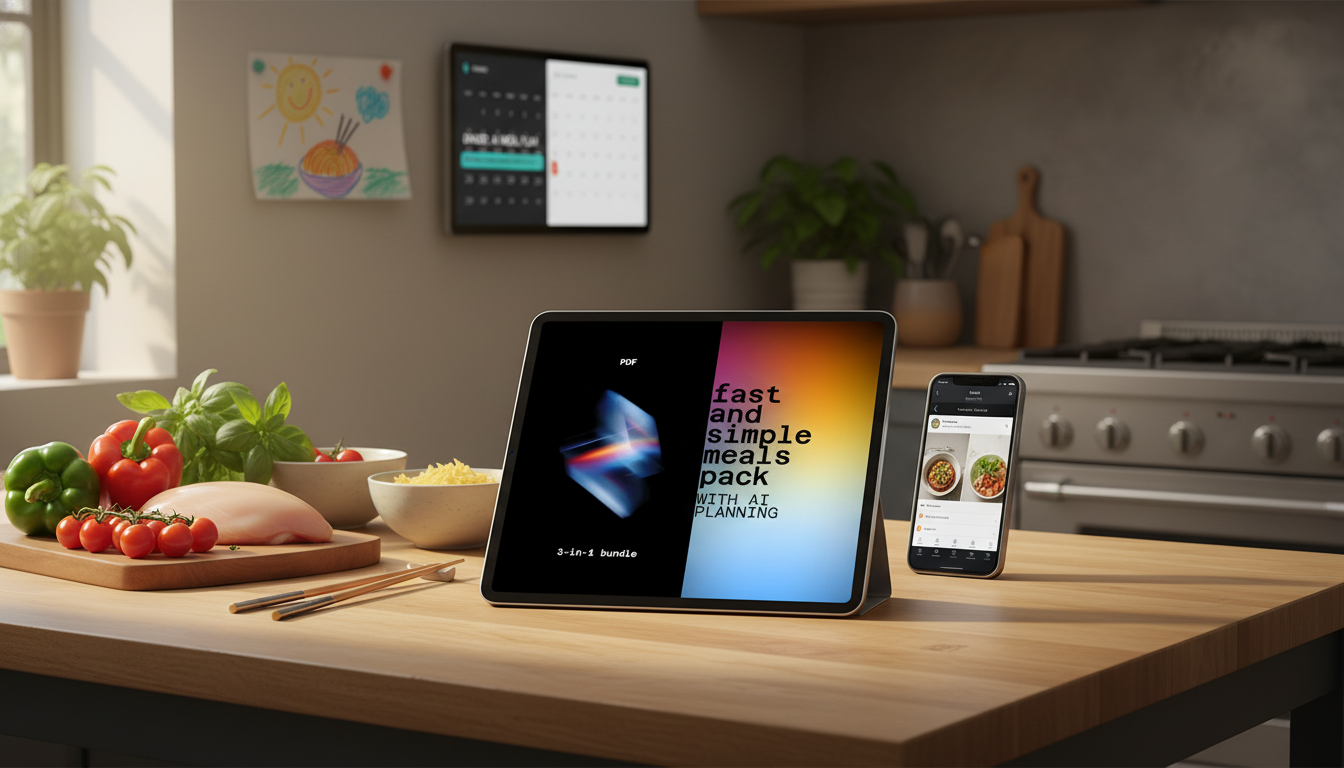
If you want a ready-to-run structure (rather than building your own from scratch), Fast and Simple Meals Pack with AI Planning is built around repeatable weeknights and flexible routines.
For hands-free help while cooking (or for keeping a recipe visible while you prep), an Adjustable Tabletop Phone Stand for Livestreaming & Vlogging can be a practical add-on—especially on nights when you’re bouncing between steps and helping kids.
Most households save time in three places: planning (fewer daily decisions), shopping (one consolidated list), and cooking (ingredient overlap and planned leftovers). The exact savings depends on family size, how often schedules change, and whether you cook 3 nights a week or 6.
Yes—using “base + options” meals, keeping spice separate, and offering simple protein or veggie swaps helps one dinner work for different tastes. Serving components separately (like taco bars or grain bowls) also reduces mealtime conflict without adding much effort.
It can, as long as the week includes intentional no-cook or low-cook nights like leftovers, breakfast-for-dinner, pantry meals, or assembly-only plates. When plans change, reshuffling the order of meals keeps the system intact without forcing a complicated dinner on a chaotic night.





Leave a comment