
A budget works best when it becomes a repeatable system: clear targets, simple rules for daily decisions, and a monthly reset that keeps goals on track. The goal isn’t perfection—it’s consistency. With the right method, realistic categories, and a short routine you can repeat, budgeting becomes the tool that keeps bills covered, cushions surprises, and steadily moves savings and debt balances in the right direction.
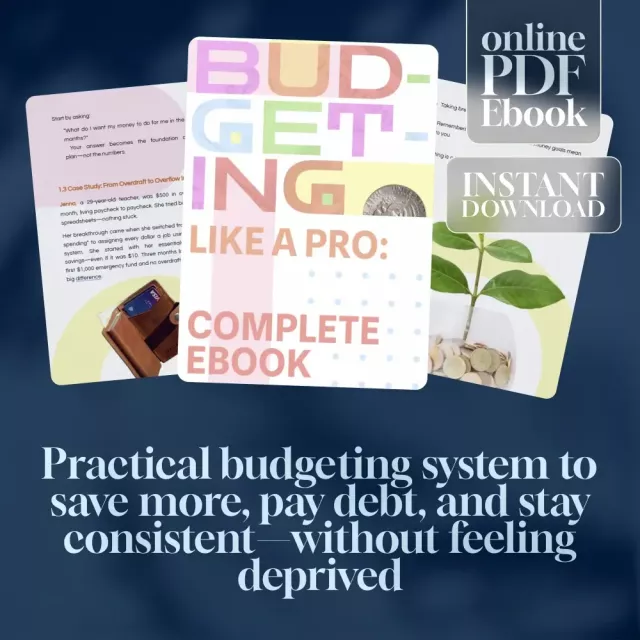
If you want a single place to run that entire cycle—plan, track, reset, and repeat—this digital planner is built around those exact steps: Budgeting Like a Pro: Complete eBook – Personal Finance Planner, Zero-Based Budgeting, 50/30/20, Pay-Yourself-First, Debt Payoff & Savings Plan.
“Best” budgeting method usually means “best for your pay schedule and decision style.” If you’re paid irregularly, you may need tighter allocation. If you’re salaried with predictable bills, you can keep it simpler.
| Method | Best for | How it works | Common pitfall | Simple fix |
|---|---|---|---|---|
| Zero-based | Variable income or tight margins | Assign every dollar to a category before spending | Forgetting irregular expenses | Add sinking funds for quarterly/annual costs |
| 50/30/20 | Stable income and straightforward categories | Use percentages for needs/wants/savings | Percentages feel vague month-to-month | Convert percentages to dollar caps per paycheck |
| Pay-yourself-first | Building savings fast and reducing decision fatigue | Automate transfers to savings/investing on payday | Overdraft risk if bills hit early | Align bill due dates and keep a buffer |
A hybrid approach works well: start with 50/30/20 as a reality check, then run a zero-based plan to allocate exact dollars. If you want guidance from trusted consumer resources while you set things up, the CFPB’s budgeting tools are a solid reference: Consumer Financial Protection Bureau (CFPB) – Budgeting resources.
Categories are where budgets either feel calm—or constantly “off.” The fix is to plan for the expenses that don’t show up every week but always show up eventually.
When you add “true expenses” as monthly line items, the budget stops being surprised, even if life still is.
For a smoother planning session—especially if you like running budgets alongside a spreadsheet or app—using a stable hands-free setup can help: Adjustable Tabletop Phone Stand for Livestreaming & Vlogging.
Pay-yourself-first works best when it’s sustainable, not heroic. The goal is to make saving automatic while keeping checking stable.
For investing basics and risk-aware starting points, use a straightforward source like the SEC’s education site: U.S. Securities and Exchange Commission (SEC) – Investing basics.
If you’re dealing with credit and debt management decisions, the FTC’s consumer guidance can help you spot common traps and stay organized: Federal Trade Commission (FTC) – Managing your money and credit.
For a guided, reusable setup that supports monthly resets without starting from scratch, use: Budgeting Like a Pro: Complete eBook – Personal Finance Planner, Zero-Based Budgeting, 50/30/20, Pay-Yourself-First, Debt Payoff & Savings Plan.
Zero-based budgeting means assigning every dollar of income to a category—bills, spending, savings, and debt—until there’s no unassigned money left. It doesn’t mean spending everything; it means planning every dollar on purpose.
Yes. Automatic savings and investing transfers can represent the “20%” (or part of it), while the remaining money follows your needs and wants split. If housing or debt is high, adjust the percentages and keep the automation so progress still happens.
Cover essentials and minimum payments first, then build a small emergency buffer to avoid new debt from surprise expenses. After that, prioritize high-interest debt while still saving something each month so one setback doesn’t erase momentum.






Leave a comment