Rest can feel out of reach when the mind won’t slow down. A structured meditation toolkit turns bedtime into a repeatable wind-down ritual—combining guided practices, simple prompts, and gentle routines designed to help the body relax and the nervous system settle. Instead of improvising every night, you follow a few familiar steps that make it easier to transition out of “day mode” and into sleep.
A sleep meditation toolkit is a digital, bedtime-focused set of resources you can return to night after night. The goal isn’t to “force” sleep—it’s to create conditions that make deep rest more likely by lowering mental noise and relaxing the body.
For foundational sleep hygiene reminders (like keeping a consistent schedule and limiting late caffeine), the CDC’s guidance is a solid reference: Sleep hygiene recommendations.
This type of bundle is designed to meet you where you are—whether you have 10 minutes and low energy or you want a longer, more complete reset after a stressful day.
If you like to follow along hands-free (or prefer a larger screen than your phone), pairing the routine with a stable device setup can help keep things calm and distraction-free. An option to consider is the Adjustable Tabletop Phone Stand for Livestreaming & Vlogging for comfortable viewing without holding your device in bed.
A meditation-based bedtime routine can be especially helpful when your body is tired but your brain keeps trying to “solve tomorrow.” The most noticeable benefits often come from repetition—training the body to recognize familiar cues that it’s safe to power down.
For a clear overview of insomnia and when to seek care, the NHLBI provides practical guidance: Insomnia (overview and care guidance).
The best routine is the one you’ll actually repeat. Think of your wind-down as a “few steps, same order” sequence—less decision-making, fewer rabbit holes, and a gentler landing into sleep.
| Time | Best for | Suggested sequence |
|---|---|---|
| 10 minutes | Late nights or low energy | 2 min breathing + 6 min guided script + 2 min quiet settling |
| 20 minutes | Most evenings | 3 min breathing + 12 min relaxation/meditation + 5 min prompt/journal |
| 30 minutes | High stress days | 5 min breathing + 20 min deeper practice + 5 min closure/reflection |
For a balanced look at mindfulness practices (including safety considerations), the NCCIH overview is helpful: Meditation and mindfulness: what to know.
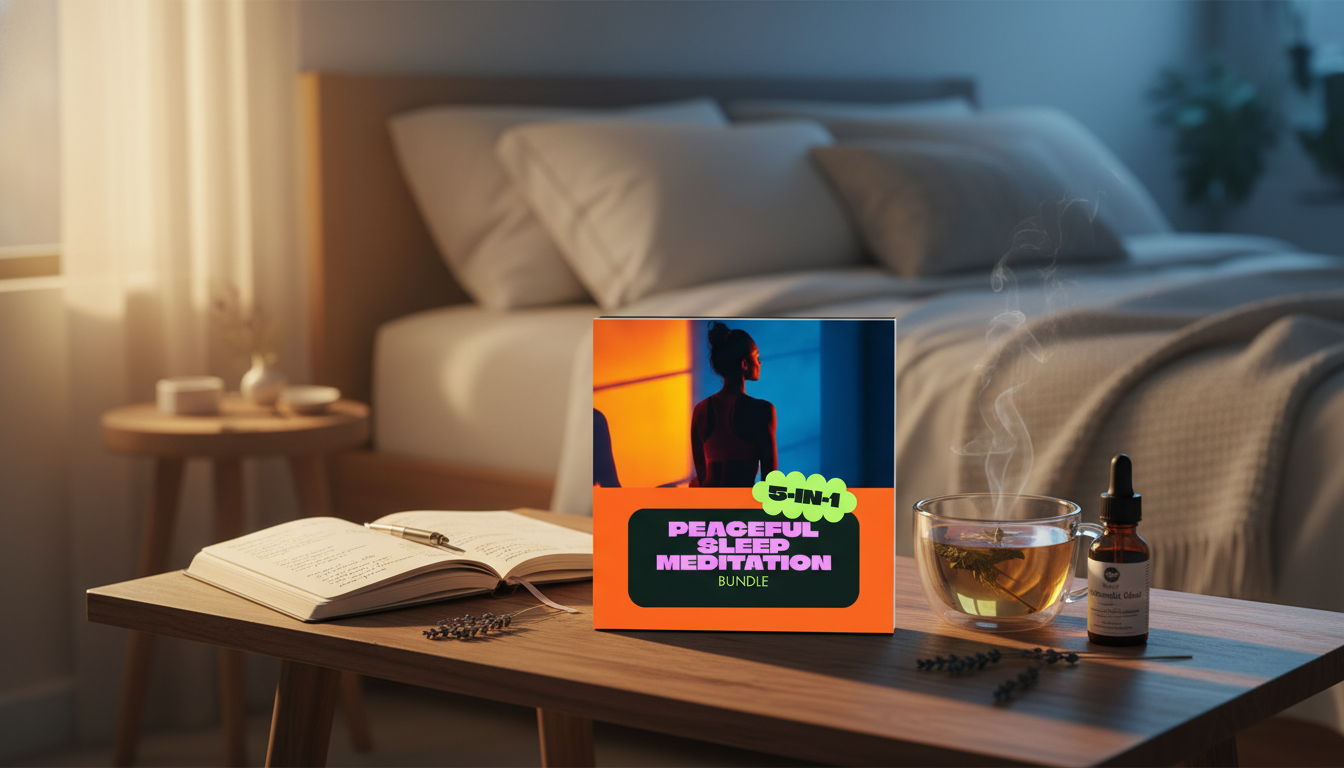
If a structured, repeatable wind-down sounds like what nights have been missing, the Peaceful Sleep Meditation Toolkit for Deep Rest – 5-in-1 Bundle of Guides & eBooks is designed for exactly that: a calm, guided pathway you can reuse without having to plan your routine from scratch.
For an additional self-care layer that still stays simple (and doesn’t require adding noisy gadgets), the Your Everyday Scent Made Simple – Daily Perfume Checklist can help streamline how you choose a consistent evening scent—useful if familiar sensory cues help you shift into “night mode.”
Most people do well with 10, 20, or 30 minutes depending on time and stress level. Consistency matters more than length, so picking a duration you can repeat most nights usually delivers better results over time.
Yes—guided practice gives your attention an “anchor,” like breath pacing or a body scan, so thoughts don’t take over. Keeping sessions shorter and using journaling prompts earlier in the evening can also reduce the amount your mind tries to process at bedtime.
Meditating in bed can reinforce the association between your bed and sleep, but meditating outside the bed may be better if you tend to feel restless or frustrated. A simple hybrid approach is to do journaling and breathing outside the bed, then move to bed for the final guided track.






Leave a comment