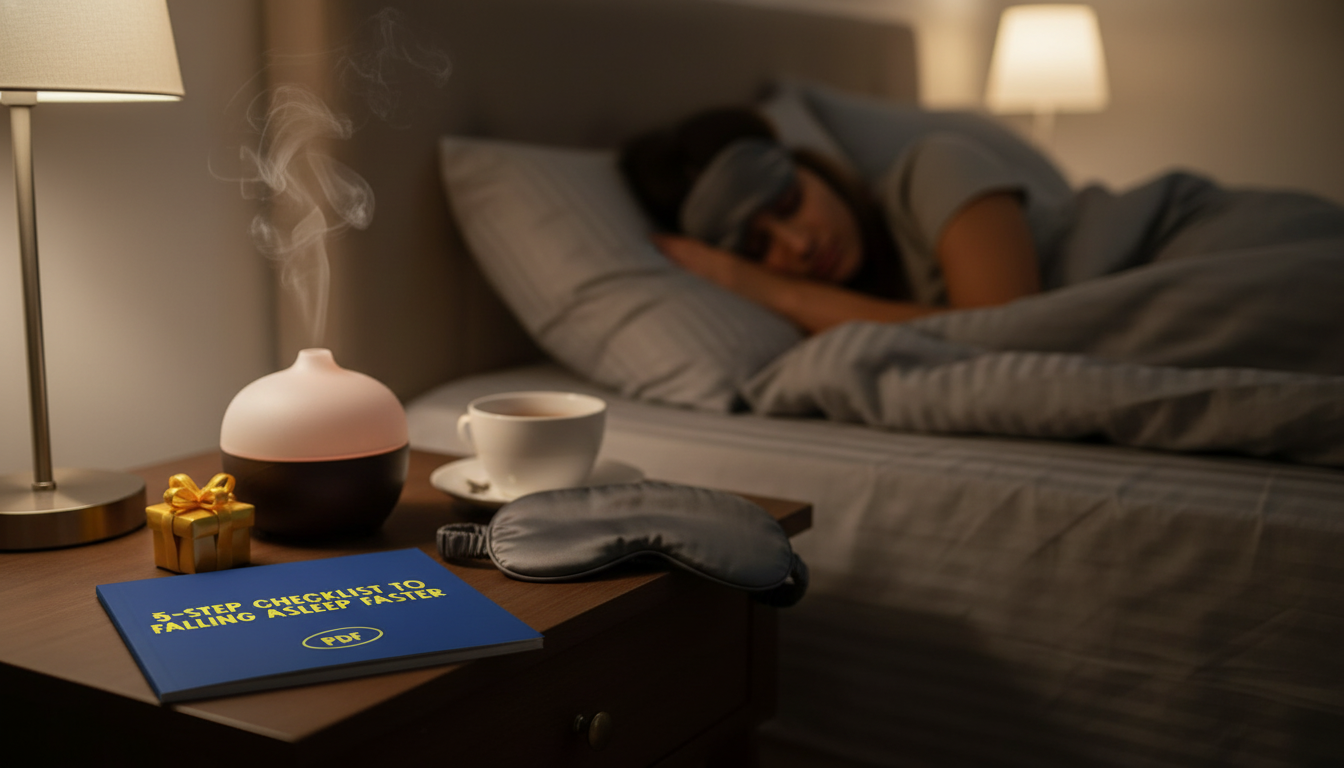
Falling asleep faster often comes down to a few repeatable signals that tell the brain and body it’s safe to power down. This checklist focuses on practical steps that work together: lowering stimulation, setting a consistent wind-down sequence, and removing common sleep blockers. Use it as a nightly routine, then adjust one step at a time based on what actually changes your time-to-sleep.
The more attention that goes to falling asleep, the more alert the brain can become—especially if the night turns into a performance review of how “well” sleep is happening. That pressure can raise arousal (mental and physical), which is the opposite of what you want at bedtime.
Common schedule and environment issues can also shift your body clock later: inconsistent bedtimes, bright light at night, and late stimulation (work, intense conversations, or suspenseful shows). A good routine reduces decision-making at night and creates predictable cues that the brain learns to associate with sleep.
If sleep latency is regularly long, start by tightening the repeatable inputs—light, timing, and arousal—before spending money on supplements or new gadgets. Public health guidance on foundational habits is a good baseline, including the CDC’s overview of Healthy Sleep Habits.
Think of this as a “minimum effective routine.” It’s designed to be short enough to repeat, even on busy nights.
Pick a realistic bedtime window and keep it steady most nights. The goal isn’t perfection—it’s reducing randomness so your body can anticipate sleep. If you’re currently all over the place, start with a 30–60 minute window (for example, lights down between 10:30 and 11:00).
Dim overhead lights, switch to warmer lamps, and avoid bright screens when possible. Light is a powerful “wake” signal for the circadian system; even small changes (dimmer, warmer, fewer sudden bursts of brightness) can help. For deeper context, see the Sleep Foundation’s explanation of how light affects sleep.
If a phone is part of your evening routine, reduce the friction: place it on a stand across the room so you’re not hovering over it in bed. An Adjustable Tabletop Phone Stand for Livestreaming & Vlogging works well as a simple “parking spot” to keep the screen out of your face while you wind down.
Keep the same sequence every night: for example, “read 10 pages → lights off → breathing count.” Make the bedroom as sleep-friendly as possible—cool, dark, and quiet—then let repetition do the work. If you want a ready-to-use version you can keep by the bed, the 5-Step Checklist to Falling Asleep Faster is designed to be checked off nightly so the routine stays consistent during stressful weeks.
| Timing | Step | What to do (examples) | Common mistake to avoid |
|---|---|---|---|
| 60–90 min before bed | Lower stimulation | Dim lights, end intense work, set Do Not Disturb | “Just one more email” or exciting content |
| 45–60 min before bed | Light hygiene | Reduce screen brightness, use warmer lighting, avoid bright overhead LEDs | Bright bathroom or kitchen lights right before bed |
| 10–20 min before bed | Body downshift | Warm shower, gentle stretching, calm breathing | High-intensity workouts late at night |
| 3–5 min before bed | Mind offload | Write tomorrow’s priorities + any worries | Mentally rehearsing problems in bed |
| In bed | Consistent cue | Same wind-down sequence nightly; keep room cool/dark/quiet | Clock-watching or changing routines every night |
If waking up at night is the bigger issue, keep the same in-bed cue routine and focus on morning light exposure and a consistent wake time. The National Heart, Lung, and Blood Institute also emphasizes behavioral approaches for insomnia, including consistent sleep-wake timing and wind-down routines (see Insomnia).
A printable checklist reduces nightly decision fatigue and keeps the steps consistent, especially during stressful weeks. The 5-Step Checklist to Falling Asleep Faster is a quick digital resource designed to be used nightly and adjusted as habits improve.
Best use: print it or keep it on your phone in night mode, then check off the steps for 7 nights to build momentum. If screens are a temptation, set your phone on a stable surface away from the bed—an Adjustable Tabletop Phone Stand can make that “phone home” easy and repeatable.
For many adults, falling asleep within about 10–30 minutes is a practical range, but occasional longer nights happen. Track patterns for 1–2 weeks (not one night) to see whether a consistent routine is improving your average time-to-sleep.
That often happens when routines drift—bedtime slides later, screens get brighter, or stimulation creeps back in. Revisit light timing, wake time consistency, and late-night intensity, then adjust just one step for a week to identify what restores progress.
It can be, but use harm-reduction: dim brightness, enable warmer color filters, avoid emotionally activating content, and set a firm stop time. Keep the same in-bed cue sequence afterward so your brain still gets a consistent “sleep signal.”





Leave a comment