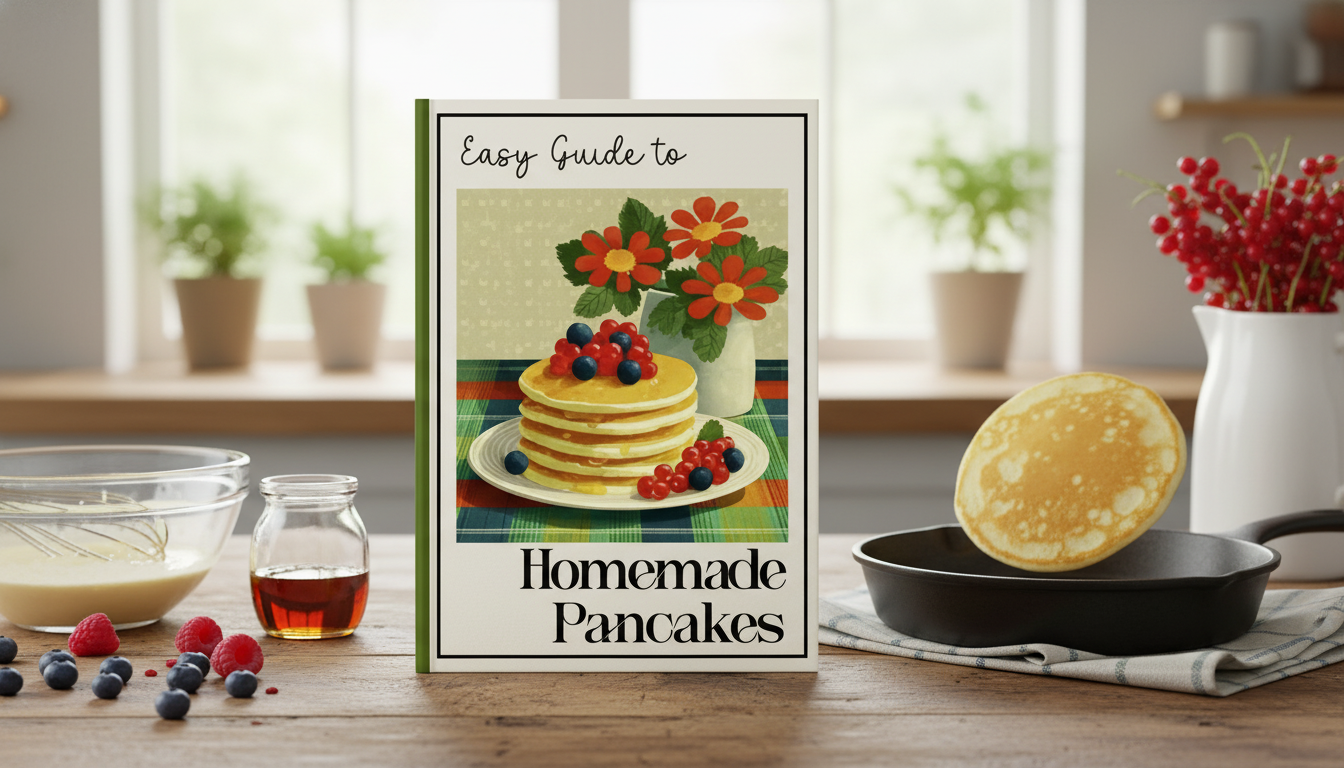
Homemade pancakes can be reliably fluffy, tender, and golden when a few small techniques line up: measured mixing, proper heat, and knowing when to flip. This step-by-step digital download keeps everything organized—core recipe, creative variations, and practical cooking tips—so breakfast turns out consistent whether it’s a quick weekday batch or a weekend stack.
If pancakes sometimes feel unpredictable—too dense one day, too pale the next—this guide is built around repeatable checkpoints. Instead of guessing, you’ll cook with clear visual cues for batter texture, pan readiness, and flip timing.
Grab the printable guide here: Flipping Fantastic: Easy Guide to Homemade Pancakes (digital download).
Great pancakes don’t require fancy equipment, but a few basics make results far more consistent. The goal is even heat, gentle mixing, and clean flipping.
| Item | Best choice | Why it helps |
|---|---|---|
| Pan | Griddle or heavy skillet | More even heat and consistent browning |
| Spatula | Thin, flexible turner | Cleaner flips with less tearing |
| Measuring | Scale (optional) or level cups | Repeatable results every batch |
| Grease | Neutral oil or oil + butter | Prevents sticking without scorching |
Most pancake problems come from three moments: how ingredients are combined, whether the pan is truly preheated, and flipping too early (or too often). Use this workflow to keep texture light and centers cooked through.
| Stage | What to look for | What to do next |
|---|---|---|
| Pan readiness | Even heat; a drop of water dances briefly | Lightly grease and portion batter |
| First side cooking | Bubbles rise and pop; edges look less wet | Check underside color, then flip |
| After flipping | Pancake puffs slightly; surface turns matte | Cook briefly, then remove to a warm plate |
| Between batches | Browning gets too fast or too slow | Adjust heat and re-grease lightly |
If you like following steps hands-free (or filming a quick breakfast reel), setting your recipe at eye level helps. An Adjustable Tabletop Phone Stand for Livestreaming & Vlogging keeps a tablet/phone steady while you cook.
Once the base batter is dependable, variations are easy—just add mix-ins in a way that protects texture and prevents scorching.
| Problem | Likely cause | Fix |
|---|---|---|
| Dense or rubbery | Overmixed batter | Stir just until combined; rest batter briefly |
| Pale and dry | Low heat or underheated pan | Preheat longer; increase heat slightly |
| Burnt outside, raw inside | Pan too hot | Lower heat; cook a touch longer per side |
| Sticking | Pan not seasoned/greased or heat unstable | Use steady medium heat; grease lightly between batches |
| Uneven browning | Hot spots or excess butter solids | Use heavier pan; wipe and re-grease with oil |
Let pancakes cool, then refrigerate promptly in a covered container. For general leftovers guidance and safe storage timelines, refer to the USDA Food Safety and Inspection Service leftovers recommendations and the FDA food storage and safety guidance. For extra pancake technique resources, King Arthur Baking is a helpful reference.
Usually overmixing or cooking on heat that’s too high. Mix only until combined (lumps are fine), rest the batter briefly, and use steady medium heat so the center sets before the exterior overbrowns.
Flip when bubbles rise and pop across the surface and the edges look set and less glossy. Avoid multiple flips; one clean flip helps keep pancakes tall and tender.
Leavening starts working right away, so batter is best mixed close to cooking time for maximum lift. If you hold it briefly, expect slightly less fluff and cook the batch promptly.





Leave a comment