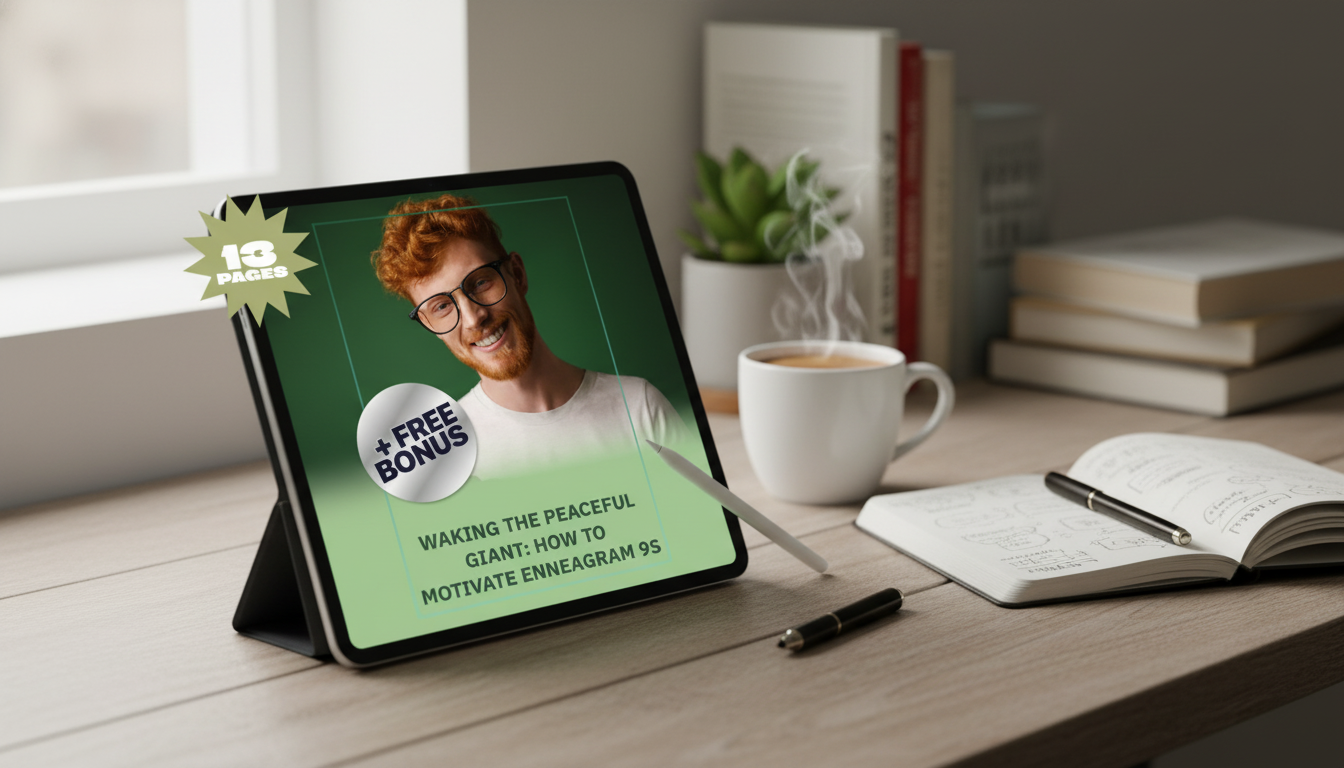
Enneagram Type 9 motivation tends to rise when life feels steady, relationships feel safe, and the next step is small enough to start without risking inner peace. When motivation looks “quiet,” it isn’t absent—it’s often waiting for the right conditions: a respectful tone, a clear first move, and a sense that action will help rather than disrupt. Below is a practical, gentle approach for Type 9s (and the people who love, live with, or lead them) to support follow-through without pressure.
At the center of Type 9 is a desire for inner stability and relational harmony. Conflict, urgency, or unpredictable demands can feel less like “a challenge to rise to” and more like a threat to the calm that keeps everything functioning. That’s why Type 9 motivation can be hard to spot: it often expresses itself as steadiness instead of intensity.
A helpful reframe: for many Type 9s, motivation looks like willingness to engage rather than a burst of urgency. Calm consistency is a valid (and often more sustainable) measure of progress.
When Type 9s get stuck, the goal is not to crank up pressure—it’s to reduce internal resistance. Three levers tend to matter most: safety, clarity, and connection.
Motivation increases when the environment feels emotionally safe: clear expectations, a respectful tone, and real permission to say no. If a Type 9 senses judgment, blame, or volatility, the nervous system often shifts toward disengagement.
Type 9s often start moving once the “first smallest step” is obvious. Vague requests like “be more proactive” can stall out because they don’t create a clear on-ramp. Specificity is soothing.
Linking action to meaningful impact can be energizing: who it helps, what it preserves, or how it improves the shared space. It also helps to explicitly value the Type 9’s role—being seen reduces the impulse to disappear into the background.
Autonomy without abandonment: Choice matters, but too much choice can paralyze. Offering two or three solid options usually works better than “Whatever you want.”
This plan is designed to create movement without disrupting peace. The goal is a small start that builds self-trust.
| If it sounds like… | Try saying/doing… | Why it works for Type 9 |
|---|---|---|
| “Just push harder.” | “Let’s make this easier to start—what’s the smallest first step?” | Reduces pressure and lowers resistance. |
| “Why don’t you care?” | “This matters, and so do you—what would help you engage?” | Affirms worth and invites participation without blame. |
| “Decide already.” | “Pick between A or B by 3 pm; either choice is okay.” | Limits options while preserving autonomy. |
| “You’re procrastinating.” | “Looks like you might be overloaded—what can we remove or simplify?” | Addresses overwhelm rather than labeling character. |
| “Speak up more.” | “Can you share one preference right now, even if it’s small?” | Makes self-assertion manageable and specific. |
For a more structured, quick-reference approach, Waking the Peaceful Giant: How to Motivate Enneagram 9s (Digital Guide) is designed for Type 9s, coaches, partners, and leaders who want practical language that doesn’t rely on pressure. It focuses on what energizes Type 9s, what shuts them down, and how to invite steady action with warmth and structure.
If building calm routines is part of the plan, a simple setup can help reduce friction—especially for timed focus sessions, guided journaling, or check-ins. The Adjustable Tabletop Phone Stand for Livestreaming & Vlogging can support hands-free use of timers, notes, or coaching calls as you build a consistent rhythm.
For deeper background, a few helpful references include The Enneagram Institute’s Type 9 overview, the APA Dictionary definition of motivation, and the autonomy/competence/relatedness framework from Self-Determination Theory (Deci & Ryan).
Type 9s tend to feel most motivated when they feel emotionally safe, the next step is clear, and the action connects to a meaningful benefit for people or stability. Progress often comes through calm consistency rather than high intensity.
Use tiny starters (2–10 minutes), decide the next step ahead of time, and set gentle deadlines with supportive check-ins. Pair action with soothing routines and focus on one priority at a time to reduce overwhelm.
Ask specific questions, invite opinions early, and normalize respectful conflict as problem-solving rather than disconnection. Reinforce small acts of self-advocacy so speaking up feels safer and more worthwhile.




Leave a comment