Positive Thinking Power Kit: A Practical Digital Bundle for Daily Positivity
A positive mindset isn’t about ignoring challenges—it’s about building mental habits that help you handle them with more clarity, steadiness, and self-support. The Positive Thinking Power Kit digital bundle is designed to make that process simpler with guided exercises, short reads, and quick checklists that fit into real routines. Use it to reset unhelpful thought patterns, strengthen self-talk, and create a repeatable daily practice that still works on busy days.
What “positive thinking” means in everyday life
Positive thinking is most useful when it stays grounded. It’s less about forcing cheerfulness and more about building a realistic, flexible way to interpret what’s happening and what to do next.
- Realistic optimism: noticing what’s working while still acknowledging what’s hard.
- Stronger problem-solving: reducing mental spirals and all-or-nothing thinking so you can choose the next step with less friction.
- Better emotional regulation: practicing reframing and self-compassion to lower the intensity of reactions over time.
- More follow-through: turning vague goals into actionable, doable moves—especially when motivation dips.
For an evidence-based perspective on building inner strength over time, see the American Psychological Association’s overview of resilience, and Mayo Clinic’s guide to stopping negative self-talk.
What’s included in the Positive Thinking Power Kit
The kit brings structure to a skill that’s often treated like a personality trait. Instead of “try to be positive,” it gives repeatable tools you can actually practice.
- Mindset guides: help identify common thought traps and replace them with balanced alternatives.
- eBooks: structured learning in short, digestible sections to build understanding without overwhelm.
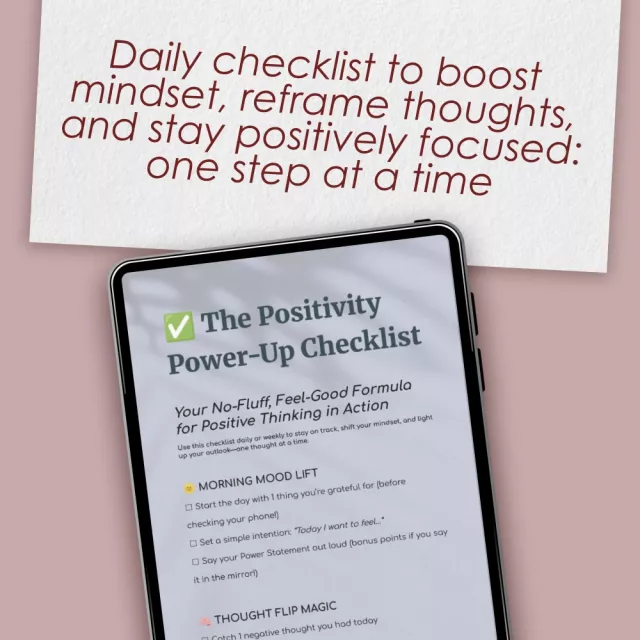
- Checklists: quick daily repetition for low-energy or high-stress days.
- Reflection prompts (if included in bundle materials): simple tracking for triggers, patterns, and progress.
Bundle components and how they’re typically used
| Component |
Best for |
Time needed |
How often to use |
| Mindset guides |
Learning a skill (reframing, self-talk, grounding) |
10–20 minutes |
2–4x per week |
| eBooks |
Deeper understanding and structured practice |
15–30 minutes |
Weekly or in short daily chunks |
| Daily checklists |
Consistency and quick wins on busy days |
3–7 minutes |
Daily |
| Reflection prompts (if included in bundle materials) |
Tracking triggers, patterns, and progress |
5–15 minutes |
Daily or every other day |
Who this kit fits best
- People who want a clear routine for positivity without relying on willpower alone.
- Anyone feeling stuck in negative self-talk, worry loops, or frequent overwhelm.
- Students, professionals, and caregivers who prefer short, repeatable micro-practices.
- Beginners who want structure, plus experienced journalers who want fresh frameworks.
A 7-day starter routine using the kit
The goal for week one isn’t a total mindset makeover—it’s momentum. Keep the sessions small enough that you’ll actually repeat them.
- Day 1: Choose one checklist and complete it once; keep it simple.
- Day 2: Read one short section from a guide; write down a single “replacement thought.”
- Day 3: Practice a quick reframe when a minor annoyance appears; record the result.
- Day 4: Add a 3-minute morning positivity scan: what’s okay, what’s improving, what’s next.
- Day 5: Use a checklist during an energy dip (midday or evening) instead of waiting for motivation.
- Day 6: Review wins and patterns—identify one trigger that commonly pulls thinking negative.
- Day 7: Build a sustainable cadence: select 1 daily checklist + 2 weekly guide sessions.
Making it work when life isn’t calm
“Do it perfectly” tends to collapse under real schedules. A better plan is to design your routine for imperfect conditions.
- Use the smallest version: one checklist item is still a completed session.
- Pair it with an existing habit: coffee, commute, lunch break, or bedtime.
- Replace perfection with repetition: aim for “often,” not “always.”
- If positivity feels forced, go neutral first: swap extreme thoughts for balanced, truthful statements that feel believable.
If you’re also building calm through breathwork or mindfulness, the NIH’s overview of meditation and mindfulness effectiveness and safety can help set realistic expectations.
How to track progress without overthinking it
- Measure consistency: number of days practiced (not the intensity of your mood).
- Notice recovery time: how quickly your mindset returns to baseline after stress.
- Look for behavior change: fewer avoidance choices, more follow-through, calmer communication.
- Keep a short weekly review: what helped most, what felt unrealistic, what to adjust.
Common questions before downloading a mindset bundle
- Digital bundles work best when used actively (checklists, prompts, repeated exercises) rather than read once.
- A simple starting point is one checklist daily plus one deeper session per week.
- If stress or anxiety is severe or persistent, mindset tools can support—but not replace—professional care.
Helpful add-ons for building a “daily practice” that sticks
FAQ
What is the power of positive thinking in practical terms?
In practical terms, positive thinking means realistic optimism and the ability to reframe unhelpful thoughts so you ruminate less and recover faster from stress. It supports coping and follow-through by helping you choose workable next steps instead of getting stuck in worst-case loops.
How long does it take to notice results from daily positivity exercises?
Many people notice small shifts in days to a few weeks, depending on consistency. Early signs include kinder self-talk, less time spent spiraling, and quicker emotional recovery after setbacks.
Is this bundle suitable for beginners who don’t journal?
Yes. The checklists and guided steps can be done without journaling, and you can start with 3–7 minutes per day; writing is optional if you want extra reflection later.
Recommended for you





Leave a comment