Better sleep is rarely about one perfect hack. It’s usually a handful of repeatable habits that line up your schedule, your bedroom, and your ability to mentally “downshift” at night. A practical guide helps most when it turns scattered advice into a simple routine you can follow, adjust, and keep—so nights feel more restorative and mornings feel more usable.
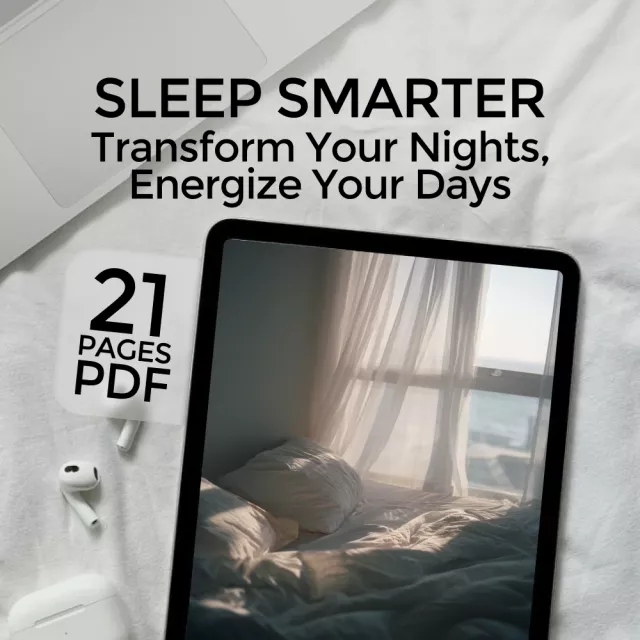
If you want a structured, step-by-step way to improve sleep quality without overcomplicating your evenings, Sleep Smarter: Transform Your Nights, Energize Your Days (digital download) is designed to function like a routine builder you can revisit whenever life gets busy.
It’s especially helpful if you’ve tried isolated tips (a new tea, a new playlist, a new supplement) but haven’t built a consistent system that actually survives stressful weeks, travel, or late nights.
Foundational sleep hygiene recommendations from organizations like the CDC and the Sleep Foundation tend to agree on the big rocks: consistent timing, a supportive environment, and habits that reduce late-night stimulation. The difference-maker is making those basics easy enough to repeat.
Most “sleep problems” are really a mismatch between three levers. Improve one lever at a time, then keep what works.
| Lever | What to adjust | Quick examples |
|---|---|---|
| Schedule | Timing and consistency | Same wake time most days; avoid long weekend swings |
| Environment | Light, temperature, noise, comfort | Dim lights 60–90 minutes before bed; cooler room; white noise if needed |
| Wind-down | Mind and body cues | Short stretch, warm shower, reading, breathwork, journaling |
Instead of trying to fix everything at once, use a one-week reset to identify your highest-impact changes. The goal isn’t “perfect sleep” by next Monday; it’s a clearer pattern of what helps you fall asleep, stay asleep, and wake up with more usable energy.
If reading helps you transition into sleep, set it up so it doesn’t turn into awkward scrolling. A hands-free option like an Adjustable Tabletop Phone Stand for Livestreaming & Vlogging can also work as a simple bedside stand for your phone or small tablet, helping you keep your posture relaxed and your device at a consistent angle during a calmer wind-down.
If persistent sleep deprivation is affecting daily safety, mood, or health, it’s worth reviewing clinical guidance and discussing patterns with a qualified professional. The National Heart, Lung, and Blood Institute (NHLBI) offers a helpful overview of sleep deficiency and why it matters.
If you want a clear, practical plan you can return to whenever your schedule shifts, explore Sleep Smarter: Transform Your Nights, Energize Your Days (digital download) and start with the 7-night reset to identify your simplest high-impact changes.
Some changes can help within a few nights—especially consistent wake time and lower evening light exposure—while other improvements often take 1–3 weeks of repetition. Tracking patterns for a week helps you keep the adjustments that actually move the needle for you.
Look first at common disruptors like late caffeine or alcohol, bedroom temperature/light/noise, stress-driven arousals, and clock-checking. If you wake up, keep lights low, avoid stimulating content, and use a calm activity until you feel sleepy again.
A consistent wake time is often the best anchor, and bedtime can follow your natural sleepiness once your routine is stable. Avoid big weekend shifts and use a predictable wind-down to make bedtime easier to repeat.





Leave a comment