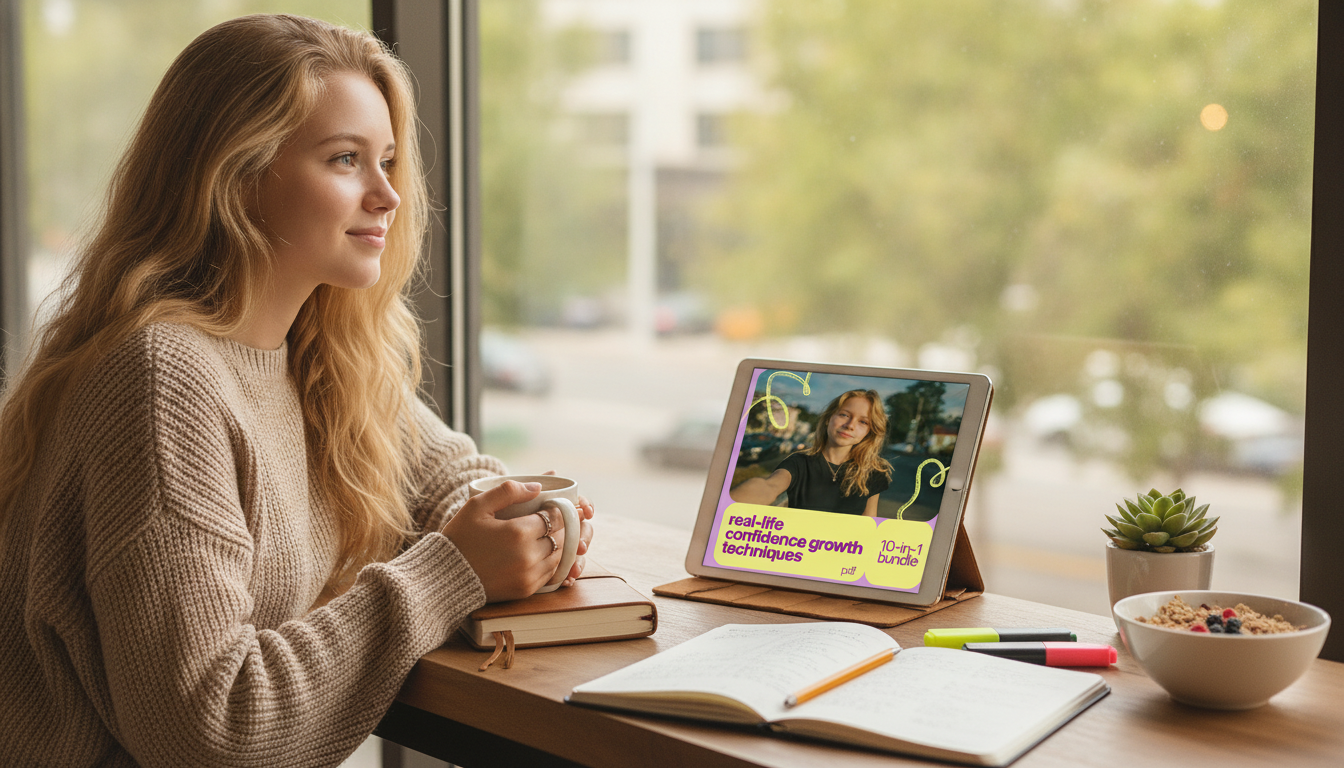
“Real-life” confidence is less about feeling unstoppable and more about acting on purpose while uncertainty is still present. It shows up as behavior: showing up, trying, noticing what worked, and adjusting the next attempt. It’s the ability to keep moving even when the outcome isn’t guaranteed.
It also helps to separate a few commonly mixed-up concepts. Self-esteem is the general sense of self-worth; confidence is situation-specific (you can feel confident at work and shaky socially); arrogance is an inflated self-view that avoids feedback and overstates ability. Healthy confidence stays flexible—it can admit “I don’t know yet” without collapsing.
Confidence often dips during transitions—new job, breakup, relocation, burnout—because old routines and familiar proof points disappear. That dip isn’t a personal flaw; it’s a normal response to a new environment. A practical target is “capable enough to act,” not “fearless all the time.”
Modern life makes it easy to feel behind, even when life is going fine. Curated feeds encourage comparison loops: other people’s highlight reels versus your unfiltered Tuesday. That gap can quietly rewrite the internal story from “I’m learning” to “I’m failing.”
Another factor is decision fatigue. Constant information can turn simple choices into overthinking. When everything has ten options and a thousand opinions, it’s easy to delay action—then interpret the delay as “I’m not confident.”
Digital comfort can also reduce exposure practice. Avoiding discomfort is easier online: you can mute, exit, ghost, or scroll past. The downside is that confidence grows from repeated real-world reps—small, survivable experiences that prove you can handle discomfort.
Finally, there’s identity drift: optimizing for being liked instead of being consistent with personal values. Confidence strengthens when actions align with what matters to you, even when you’re not universally approved.
Instead of positivity-only statements, use accurate statements tied to reality: “I get nervous and I can still speak,” or “I’m learning; my first attempts look messy.” For more on how self-esteem works and why it matters, see the American Psychological Association overview on self-esteem.
Posture, breathing, and sleep can reduce the body’s “alarm” response. Anxiety can feel like a warning of danger, but it’s often just a stressed nervous system. If anxiety symptoms are persistent or intense, the National Institute of Mental Health has a helpful primer on anxiety disorders and when to seek support.
Real-Life Confidence Growth Techniques: 10-in-1 Digital Bundle to Improve Self-Confidence is designed like a practical system: exercises that move from low-stakes to high-stakes, prompts that clarify strengths and values, and routines that make confidence practice feel doable on a busy day.
| Situation | Helpful technique | Small first step (10 minutes or less) |
|---|---|---|
| Speaking up in meetings | Preparation + one-sentence contribution | Write one point and ask one clarifying question |
| Social anxiety | Graded exposure + grounding | Say hello to one person and stay for 5 minutes |
| Setting boundaries | Scripted assertiveness | Draft a 2-line boundary message and save it |
| Imposter feelings | Evidence log | List 3 tasks completed this week and what they required |
| Fear of rejection | Rejection practice + self-compassion | Send one low-stakes request (info, quote, meetup) |
| Low self-trust | Promise-keeping micro-habits | Choose one tiny promise and complete it today |
If you want to practice speaking more comfortably, pairing your reps with a simple recording setup can help. An Adjustable Tabletop Phone Stand for Livestreaming & Vlogging makes it easier to record a 60-second “practice update” and review calmly, rather than relying on memory (which tends to exaggerate mistakes).
For some people, a small “ready” ritual improves social ease. Something as simple as using a checklist to choose a signature scent can signal “I’m prepared.” Your Everyday Scent Made Simple – Daily Perfume Checklist can support that consistent pre-event routine.
If panic, depression, or trauma responses are interfering with daily life, additional support can make a major difference. Approaches like CBT are commonly used to address unhelpful thought patterns and avoidance behaviors; the NHS overview of CBT explains the basics.
The Real-Life Confidence Growth Techniques: 10-in-1 Digital Bundle to Improve Self-Confidence is digital and designed for repeat use across multiple confidence areas. It works best with a simple schedule—about 10–15 minutes per day—especially for self-paced learners who want structured exercises instead of vague motivation.
Many people notice early changes within 1–2 weeks as follow-through improves and avoidance drops. Deeper, steadier confidence typically grows over 4–8 weeks with consistent exposure practice and brief reflection.
Yes—graded exposure, simple scripts, and evidence tracking can support both social confidence and workplace visibility. If anxiety is severe or disabling, it’s not a replacement for professional care.
Use micro-habits: reduce the daily task to 10 minutes, focus on promise-keeping, and rely on a weekly review to restart without self-criticism. Consistency is built by making the next step small enough to complete on a hard day.



Leave a comment