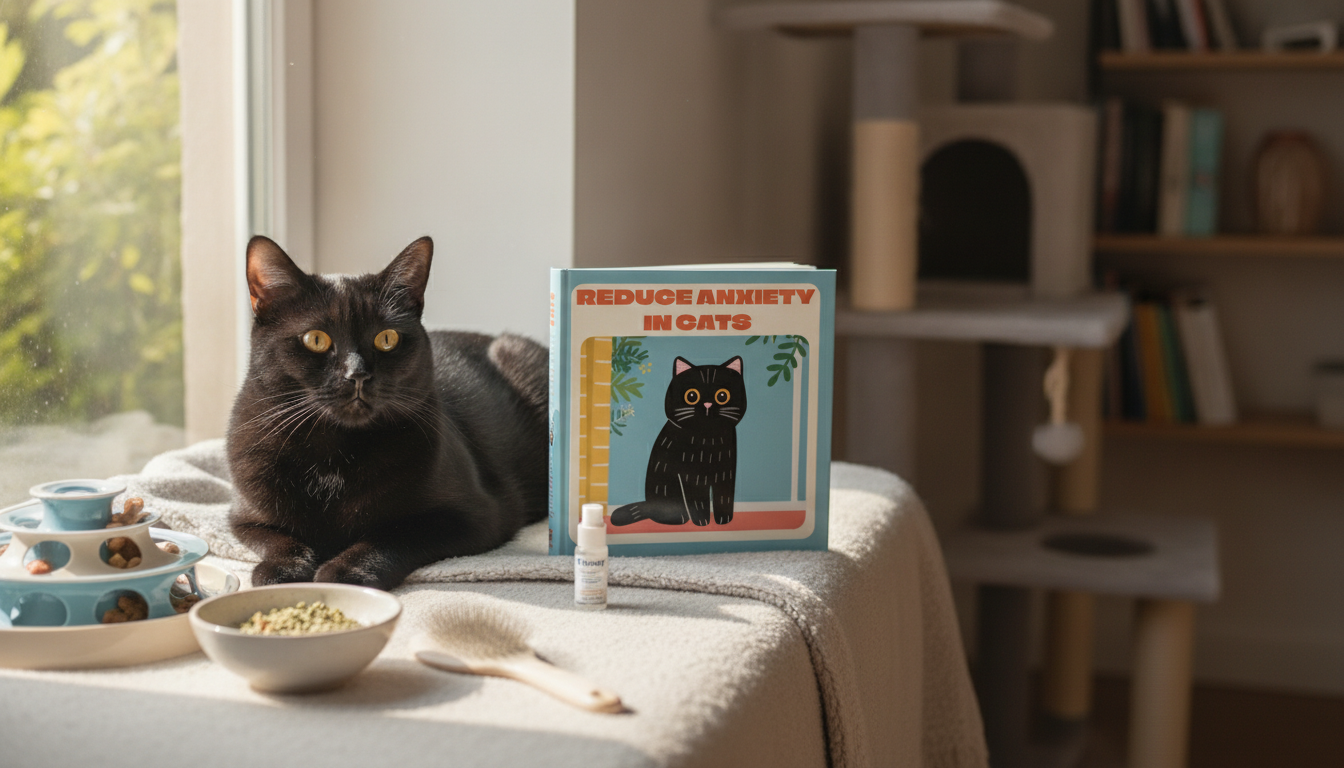
Anxiety in cats can show up as hiding, excessive vocalizing, overgrooming, litter box avoidance, or sudden aggression. Lasting relief usually comes from a mix of predictable routines, a home setup that supports natural feline needs, and training that builds confidence without forcing interaction. The steps below focus on practical changes that reduce stress triggers while helping cats feel safe and in control.
Cats have unique quirks, but anxiety usually looks like a shift from your cat’s normal baseline. A confident cat may still hide sometimes; an anxious cat starts hiding more often, for longer, and in new places.
If anxiety appears suddenly or escalates quickly, start with a veterinary visit. Pain and illness can look like “behavior problems,” and treating stress without addressing the root cause can delay relief.
A cat’s environment is often the biggest lever for reducing anxiety. The goal is to make essentials (rest, bathroom, food, water) easy to access without conflict, while providing safe observation points and private retreats.
| Trigger | What it can look like | Supportive change |
|---|---|---|
| No safe retreat | Hiding under furniture, swatting when approached | Add covered beds and a quiet room; avoid reaching into hiding spots |
| Crowded litter area | Avoiding box, urine marking, hovering near the box | Add a second box; move boxes to calm, separate locations |
| Unpredictable schedule | Vocalizing, clinginess, nighttime disruption | Set consistent feeding/play times; use automatic feeders if needed |
| Conflict with another pet | Blocking hallways, chasing, tension around resources | Separate resources (food, water, boxes); gradual reintroductions |
| Outdoor stimuli (cats/noises) | Window guarding, growling, spraying near windows | Block sightlines, provide alternative perches, increase enrichment |
Routine reduces uncertainty, and uncertainty is a major driver of feline stress. Aim for “predictable flexibility”: similar timing and sequence each day, without micromanaging every minute.
For additional feline home and behavior guidance, reputable resources include the American Association of Feline Practitioners (AAFP), the ASPCA cat behavior library, and International Cat Care.
If you want a structured routine, training exercises, and practical checklists, How to Reduce Anxiety in Cats | Calming Cat eBook, Feline Anxiety Relief Guide, Cat Behavior Training & AI Insights for Stress-Free Pets can help you build a consistent plan for enrichment, trigger reduction, and gradual confidence building—especially in multi-cat homes or with long-standing fear patterns.
Since diet changes and feeding routines can also influence behavior and predictability, Pet Nutrition 101: What Every Pet Parent Needs to Know | Essential Pet Food Guide, Nutrition Basics Every Pet Parent Should Know | Digital eBook Download is a helpful companion for pet parents tightening up daily habits.
Some cats improve within days once they have predictable routines and better hiding/vertical options, while others need weeks to months—especially when fear triggers are intense or long-standing. Tracking patterns and staying consistent helps you see steady progress and identify setbacks early.
Common causes include changes in environment or schedule, conflict with other pets, lack of safe territory, outdoor cat sightings, loud noises, inadequate enrichment, past trauma, and underlying pain or illness. Often, more than one factor is involved at the same time.
Get professional help for sudden onset, self-injury/overgrooming, litter box issues, aggression, weight loss, persistent hiding, or any situation where safety is a concern. A vet should rule out medical causes first, and a qualified behavior professional can guide a tailored plan if problems persist.







Leave a comment