What to Do When Your Toddler Has Nightmares: Calm Comfort, Better Bedtimes, and Practical Next Steps
Nightmares can feel sudden and intense—for toddlers and parents alike. The good news: most nightmares are a normal part of development, and small, consistent changes can reduce how often they happen and how long bedtime stays disrupted. Below are practical steps for what to do in the moment, what to tweak during the day, and how to know when it’s time to loop in your pediatrician.
Nightmares vs. night terrors: why the difference matters
Many parents use “nightmare” to describe any upsetting nighttime episode, but nightmares and night terrors aren’t the same—and the best response changes depending on which one you’re dealing with.
- Nightmares usually happen in the second half of the night (when REM sleep is more common). Toddlers often wake up scared, cry, and seek comfort.
- Night terrors often happen earlier in the night. A child may scream, thrash, or look awake, but they’re typically not fully awake, can be hard to console, and usually won’t remember it the next day.
- If your toddler can describe being scared or remembers a “bad dream,” it’s more likely a nightmare.
- Nightmares benefit from connection and reassurance. Night terrors tend to improve with gentle safety measures and minimal stimulation until the episode passes.
Quick comparison: nightmares and night terrors
| Feature |
Nightmares |
Night terrors |
| Typical timing |
Later at night (often early morning) |
Earlier in the night (first few hours) |
| Child awake? |
Usually fully awake and alert |
Often not fully awake; confused |
| Comfort response |
Seeks comfort; calms with reassurance |
May resist comfort; calms as episode passes |
| Memory next day |
May remember parts of the dream |
Usually no memory |
| Best parent focus |
Validate feelings, reassure, resettle |
Keep safe, keep lights/voices low, wait it out |
For more background on common childhood sleep disruptions, see HealthyChildren.org (American Academy of Pediatrics) and the Mayo Clinic.
What to do in the moment: a simple calm-down sequence
When your toddler wakes up terrified, the goal is quick safety + quick soothing—without accidentally turning 2 a.m. into playtime.
- Start with safety and presence. Move close, speak softly, and check for obvious needs: blanket kicked off, thirst, a too-hot room, or a noisy hallway.
- Name and validate the feeling. Try: “That was scary. You’re safe. I’m here.” Keep it short; long explanations can wake them up more.
- Use a steadying anchor. Pick one predictable calming tool—slow breaths together, a gentle back rub, or holding hands—and do it the same way each time.
- Keep the room low-stimulation. Use dim light if needed. Avoid screens. Too much talking, bright light, or new activities can reset the “awake” cycle.
- Offer a brief resettling ritual. A tiny sip of water, one comfort phrase, tuck in, and your consistent goodnight cue.
- If they want to talk, listen briefly—then return to safety. “That happened in your dream. Right now you’re in your bed, and you’re safe.” Then back to your calming anchor.
What can trigger toddler nightmares (and what to adjust first)
Nightmares often cluster when a toddler’s brain is processing new skills, stress, or disrupted sleep. The fastest improvements usually come from adjusting one or two factors and keeping them steady for a full week.
- Overtiredness. Late bedtimes, skipped naps, and inconsistent schedules can lead to more night wakings and vivid dreams.
- Big changes. New daycare, potty training, travel, moving rooms, a new sibling, or family stress can show up at night.
- Spooky input. Even “kid” content can be intense. Fast-paced shows, suspenseful stories, or Halloween themes close to bedtime are common culprits.
- Sleep environment shifts. New noises, bright hallway light, unfamiliar rooms, or a nightlight that casts strange shadows can increase fear.
- Illness and discomfort. Congestion, ear pain, reflux, eczema itching, or growing pains can fragment sleep and make nighttime feel unsafe.
Bedtime routines that reduce nightmares over time
The most effective bedtime routines are less about perfection and more about repetition. Toddlers relax when they know what’s coming next.
What not to do (even if it feels helpful at 2 a.m.)
When to talk to a pediatrician or sleep specialist
For a broader overview of parasomnias in kids, the National Sleep Foundation is another helpful starting point.
A ready-to-use plan for parents who want step-by-step guidance
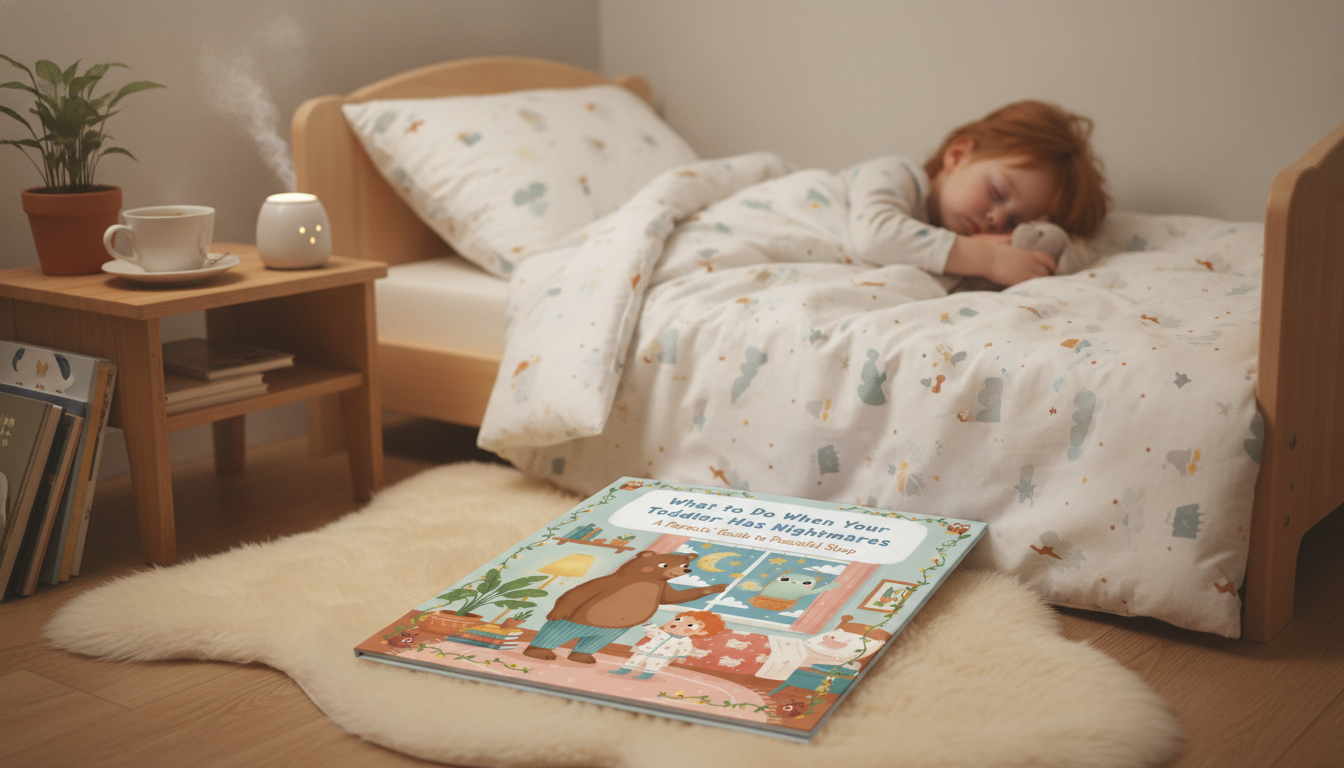
Product to consider: What to Do When Your Toddler Has Nightmares (ebook guide)—a digital guide built around practical, repeatable strategies for in-the-moment comfort and smoother bedtimes.
If you use a phone as a baby monitor, a stable setup can also help you avoid extra trips and light in the room during resettling: Adjustable Tabletop Phone Stand for Livestreaming & Vlogging.
FAQ
How long do toddler nightmares usually last?
Many toddler nightmares are temporary and improve as routines stabilize or stressors pass. Consistent sleep schedules and calmer pre-bed input often reduce frequency within a couple of weeks; seek extra help if they’re frequent and disruptive for several weeks.
Should a toddler sleep in the parents’ bed after a nightmare?
Comfort comes first, but consistency matters. When possible, offer a short cuddle and reassurance, then resettle your toddler in their own bed with a comfort object or brief check-ins so the pattern doesn’t become a nightly expectation.
What’s the best thing to say when a toddler wakes up scared?
Keep it short and steady: “That was scary. You’re safe. I’m here. Let’s take a slow breath and go back to sleep.” A predictable phrase repeated the same way each time helps your toddler settle faster.
Recommended for you






Leave a comment